
 By Noah C
·📅 19 Sep 2022·🔄 Updated: 12 Jun 2026
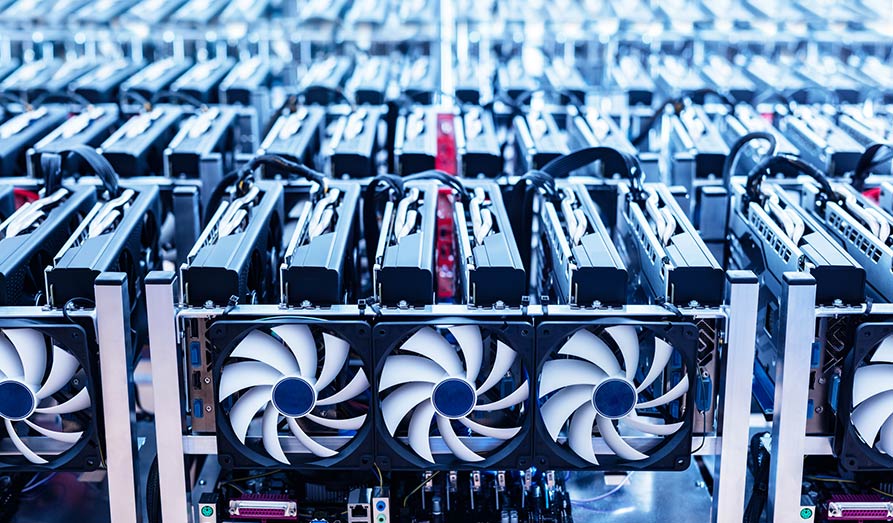
Bitcoin miners are often described as just another energy-hungry industry. That is partly fair: mining uses a lot of electricity. But Bitcoin mining also has one unusual feature that most large power users do not have: miners can often choose where they operate, when they consume power and when to shut down.
That does not make Bitcoin mining automatically “green” or automatically good for every grid. The reality is more interesting. In the right place, with the right contracts and the right energy source, miners can act as flexible demand. In the wrong place, they can add pressure to local grids, annoy communities with noise and compete with households or businesses for electricity.
This updated Crypto Lists guide explains the five main characteristics that make Bitcoin miners different from most industrial energy users, especially in a world where AI data centres, electrification and renewable energy are all increasing the pressure on power systems.
Go directly to
- 1 Why Bitcoin mining energy use is different
- 1.1 Mining operations for Bitcoin do not care where they are located
- 1.2 Bitcoin miners are price-sensitive consumers of energy
- 1.3 Modular scale-up in Bitcoin mining setups
- 1.4 Bitcoin mining process can be made mobile
- 1.5 Bitcoin mining is susceptible to interruptions
- 1.6 Where critics disagree
- 1.7 Conclusion
- 2 FAQ: Bitcoin mining and energy use
Why Bitcoin mining energy use is different
Most industries need electricity because they produce something physical or provide a service that must run continuously. A factory needs transport links, workers and supply chains. A hospital cannot shut down when power prices spike. A cloud data centre may have uptime guarantees and enterprise customers expecting constant service.
Bitcoin miners are different. They produce hashes. The output can be transmitted globally over the internet, and the machines can often be turned off without destroying inventory, damaging equipment or breaking a customer contract.
Crypto Lists view: That flexibility is the reason Bitcoin mining deserves a more serious energy discussion than “it uses power, therefore it is bad”. The better question is where the power comes from, whether the miner can curtail during stress periods, and whether the operation helps or harms the local grid.
Mining operations for Bitcoin do not care where they are located
Bitcoin mining is one of the most location-flexible electricity businesses in the world. A mining operation does not need to be close to customers, ports or city centres. It mainly needs cheap power, internet access, cooling and a stable operating environment.
That means mining can move closer to energy sources that are otherwise difficult to monetize. Examples include remote hydro, underused renewable generation, excess power in isolated areas or natural gas that would otherwise be flared at oil fields.
One of the most discussed examples is flare gas. In some oil-producing regions, natural gas is burned because it cannot be economically transported or sold. Some Bitcoin mining operators have tried to convert that wasted gas into electricity on site. Supporters argue this can reduce methane emissions compared with uncontrolled venting or inefficient flaring, while critics argue it can also prolong fossil-fuel activity if not properly managed.
The location advantage is real, but it should not be exaggerated. A miner still needs permits, equipment, grid or generator access, cooling, maintenance and a reasonable political environment. Cheap energy alone is not enough if the site creates noise complaints, regulatory problems or unreliable uptime.
Bitcoin miners are price-sensitive consumers of energy
Bitcoin miners are unusually sensitive to electricity prices because power is one of their largest operating costs. If the cost of electricity rises above the expected value of the Bitcoin produced, mining becomes unattractive.
This gives miners a direct financial reason to reduce power use during expensive periods. In markets with real-time electricity pricing or demand-response programs, miners may shut down when the grid is under stress and restart when power is cheaper.
That is the theory. In practice, it depends on hashprice, mining difficulty, Bitcoin price, power contracts and curtailment incentives. When Bitcoin mining revenue is very high, miners may be willing to keep running at higher electricity prices. When mining margins are thin, they are more likely to shut down quickly.
Useful way to think about it: Bitcoin miners are flexible, but they are not charities. They curtail when the economics make sense or when their contracts require it.
This is why grid operators and regulators increasingly care about large flexible loads. ERCOT in Texas, for example, created a voluntary curtailment program for large flexible customers, including Bitcoin mining facilities, during peak demand periods. That shows the opportunity. It also shows why large miners need to be visible to grid planners rather than operating as invisible power users.
Modular scale-up in Bitcoin mining setups
Bitcoin mining is modular. A site can be built around a small number of machines or scaled into a large industrial operation using thousands of ASIC miners. The load can often be adjusted by adding or removing equipment.
That makes mining easier to match with available power capacity than many traditional industries. A property owner with 5 MW of spare power, a utility with 50 MW of underused capacity or an energy producer with a stranded resource can theoretically size a mining operation around what is available.
This modularity is one reason Bitcoin mining expanded so quickly in regions with cheap energy. It is also one reason regulators have started paying closer attention. A mining site that looks manageable at 10 MW can become a very different grid planning issue at 100 MW or more.
Crypto Lists observation: The modular nature of mining is a strength for energy matching, but it can become a weakness if expansion happens faster than local infrastructure, noise controls or grid studies can handle.


Supply: 18,925,000 / 21,000,000
Release date: January 3, 2009
Description: Keen on buying Bitcoin instead of mining? See the top sites with low spread for BTC long and short positions here.
Risk warning: Trading, buying or selling crypto currencies is extremely risky and not for everyone. Do not risk money that you could not afford to loose.
Bitcoin mining process can be made mobile
Bitcoin mining can also be mobile in a way that most heavy industries cannot. Mining equipment is often placed in containerised units that can be transported to different sites. These plug-and-play mining containers allow operators to move closer to power sources, relocate after a contract ends or reduce exposure to a difficult local market.
This matters because electricity systems are changing quickly. Renewable generation can appear in places where transmission is limited. Oil and gas sites may have temporary excess energy. Grid congestion can make power cheap in one region and expensive in another.
A mobile mining setup can respond to these conditions more easily than a factory or traditional data centre. If local power becomes scarce, uneconomic or politically difficult, the machines can theoretically be moved elsewhere.
That said, “mobile” does not mean effortless. Moving containers, reconnecting equipment, arranging permits and securing new power agreements still takes planning. But compared with most industrial loads, Bitcoin mining is unusually relocatable.
Bitcoin mining is susceptible to interruptions
The most important difference between Bitcoin mining and many other electricity users is interruptibility. A miner can stop hashing within minutes, sometimes faster. A factory line, hospital, airport, payment network or AI cloud service cannot usually behave like that without major consequences.
This is where the comparison with AI data centres becomes important. AI infrastructure is now one of the largest new sources of electricity demand. The International Energy Agency has highlighted data centres and AI as major drivers of power demand growth, while Reuters reported in June 2026 that U.S. power use is expected to reach new record highs in 2026 and 2027 partly because of AI data-centre demand.
AI data centres usually need high reliability. They serve cloud customers, train models, run inference workloads and support services that are expected to stay online. Bitcoin miners, by contrast, lose potential revenue when they shut down, but they do not normally break a service-level agreement with millions of users.
This makes Bitcoin mining potentially valuable as an interruptible load. During grid stress, miners can reduce demand and allow electricity to flow to homes, hospitals and businesses. During periods of excess generation, they can absorb cheap power that might otherwise be curtailed.
But this benefit is not automatic. A 2026 study using the Texas power market found that mining load does respond to electricity-sector costs, but the strength of that response depends on mining economics such as hashprice. In plain English: miners are more flexible when it pays them to be flexible.
Where critics disagree
Bitcoin mining supporters often argue that miners strengthen grids, improve renewable economics, reduce flaring and create a buyer for stranded power. Critics respond that miners still use enormous amounts of electricity, can create noise problems and may compete with other users when grids are already strained.
Both sides can be right depending on the site. A well-managed miner using stranded or curtailed energy is very different from a noisy facility placed near homes or a large mining load added to a constrained grid without proper planning.
Noise is one of the most underestimated issues. Mining machines and cooling systems can be loud, especially in air-cooled facilities. For local residents, the debate is not always about Bitcoin or climate. Sometimes it is simply about whether they can sleep.
The best mining operators increasingly need to prove more than cheap power access. They need credible curtailment agreements, transparent community relations, strong noise controls and clear evidence that they are not pushing costs onto ordinary electricity users.
Conclusion
Bitcoin mining is not a normal energy consumer. It is location-flexible, price-sensitive, modular, movable and interruptible. Those five traits explain why mining can sometimes fit into energy systems in ways that factories, hospitals and AI data centres cannot.
But “can” is the key word. Bitcoin mining can help monetize stranded energy, support demand response and reduce wasted power in some cases. It can also create local problems if the energy source, grid connection, noise profile or business incentives are poorly managed.
For Crypto Lists readers, the balanced view is this: Bitcoin mining should not be judged only by how much electricity it uses. It should be judged by where that electricity comes from, what else needed the power, whether miners shut down during stress periods, and whether the local community benefits or suffers.
As AI data centres compete for more electricity and grids look for flexible demand, Bitcoin mining will remain part of the energy debate. The strongest mining operations in the coming years may not be the ones with the cheapest power alone, but the ones that can prove they are useful power users rather than just large power users.
FAQ: Bitcoin mining and energy use
Why do Bitcoin miners use so much electricity?
Bitcoin miners use electricity to run specialised ASIC machines that compete to secure the Bitcoin network and earn block rewards. The more machines and computing power involved, the more electricity the network consumes.
Can Bitcoin miners help power grids?
They can help in some situations if they act as flexible demand, shut down during grid stress and use power that would otherwise be wasted or curtailed. The benefit depends on contracts, location, energy source and grid rules.
Are Bitcoin miners different from AI data centres?
Yes. AI data centres usually need high uptime and continuous service. Bitcoin miners can often shut down quickly when power prices rise or the grid needs demand reduction, although they will only do so when the economics or contracts make sense.
Is flare gas mining good for the environment?
It depends. Using gas that would otherwise be wasted may reduce some emissions compared with venting or inefficient flaring. But critics argue it can also support continued fossil-fuel production if not carefully managed.
Should Bitcoin mining be considered green?
Not automatically. A mining operation using stranded renewable power and curtailing during stress is very different from one using fossil-heavy grid power in a constrained area. The energy source and local impact matter more than the label.