
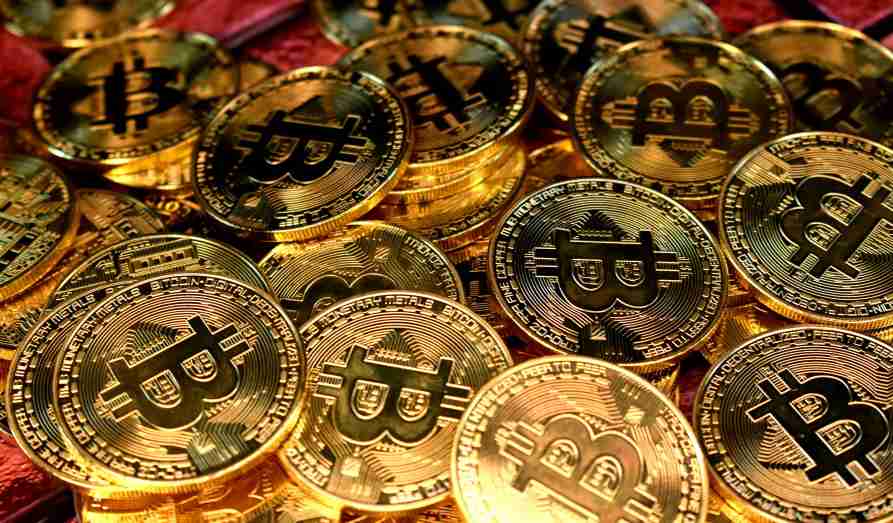


Few assets have changed as much over the past decade as Bitcoin. What began as a niche experiment after the 2008 financial crisis is now traded through regulated spot ETFs, held by public companies and followed by investors around the world.
That does not mean Bitcoin has “won” or that it behaves exactly like gold. The digital gold argument is stronger than it was a decade ago, but it still has weaknesses. Bitcoin remains volatile, reacts to liquidity conditions, and can fall sharply when risk appetite disappears.
The idea that Bitcoin could eventually mature into a digital version of gold has been discussed for years by investors, analysts and institutions. Today, the debate is more relevant than ever thanks to spot Bitcoin ETFs, the 2024 halving, growing institutional ownership and continued interest from long-term investors.
Go directly to
- 1 BTC Price Movements Will Resemble those of Gold
- 2 The BTC Adoption Rate is Likely to Keep Going Up
- 3 Is BTC the Digital Gold?
- 4 Gold Has Actually Been Outperforming BTC
- 5 Ultra maturation on the cards?
- 6 What would confirm Bitcoin’s maturity?
- 7 Risks to the digital gold thesis
- 8 Final view from Crypto Lists
- 9 FAQ
- 10 Is Bitcoin really digital gold?
- 11 Did spot Bitcoin ETFs make Bitcoin more mature?
- 12 When was the latest Bitcoin halving?
- 13 Can Bitcoin protect against inflation?
- 14 Is Bitcoin safer than gold?
BTC Price Movements Will Resemble those of Gold
The idea behind “Bitcoin as digital gold” is simple: Bitcoin has a fixed maximum supply, it is not issued by a central bank, and it can be held outside the traditional banking system. In theory, those features should make it attractive when investors worry about inflation, currency debasement or financial repression.
In practice, the comparison is more complicated. Gold has thousands of years of monetary history, deep central bank demand and a long track record during crises. Bitcoin has only existed since 2009 and still behaves more like a high-volatility macro asset than a classic safe haven.
Still, Bitcoin (see the coin review) has matured. The biggest change came in January 2024, when the U.S. Securities and Exchange Commission approved the listing and trading of spot Bitcoin ETFs from major issuers. That gave traditional investors a simpler route to Bitcoin exposure through familiar brokerage and retirement-account structures. The SEC was careful to say the approval did not mean it endorsed Bitcoin, but the market-structure change was significant.
Readers who want the official decision can review the SEC’s statement on spot Bitcoin exchange-traded products, which explains both the approval and the regulator’s warning about Bitcoin’s risks.
Crypto Lists observation: Bitcoin may not move like gold every month, but the way investors access it has changed. ETFs, institutional custody, regulated funds and improved market infrastructure make Bitcoin look less like a fringe crypto asset and more like a recognised alternative asset. That is maturity, even if the price remains volatile.
The BTC Adoption Rate is Likely to Keep Going Up
Bitcoin adoption is no longer only about retail buyers opening exchange accounts. The adoption story now includes spot ETFs, corporate treasury strategies, long-term holders, payment experiments, pension and wealth-management interest, and investors who treat Bitcoin as a hedge against monetary instability.
The 2024 Bitcoin halving also matters. On April 20, 2024, Bitcoin’s block reward fell from 6.25 BTC to 3.125 BTC at block 840,000. That did not guarantee a higher price, but it did reduce the flow of newly mined Bitcoin entering the market. For an asset whose entire monetary policy is based on scarcity, each halving is part of the long-term maturation story.
Bitcoin’s supply schedule is one of its clearest differences from fiat money. Central banks can change policy. Governments can issue more debt. Bitcoin’s issuance follows code, not committee meetings.
That is why Bitcoin remains attractive in countries where inflation, capital controls or currency weakness are serious problems. But the adoption story is not limited to emerging markets. In developed markets, Bitcoin is increasingly used as a portfolio diversifier, a macro speculation instrument and a long-term store-of-value bet.
None of this means the adoption curve will be smooth. Bitcoin still faces regulatory pressure, energy criticism, custody risks, tax complexity and competition from stablecoins, tokenised assets and other crypto networks.
Is BTC the Digital Gold?
Bitcoin is often described as digital gold because it shares several characteristics with the precious metal. Both assets are scarce, can be held outside the traditional banking system, and are viewed by many investors as a way to preserve purchasing power over the long term.
Bitcoin’s maximum supply is fixed at 21 million coins, while gold’s supply grows slowly through mining. Supporters argue that this predictable scarcity gives Bitcoin an advantage in a world where governments and central banks can create new money.
However, Bitcoin is still a much younger asset. Gold has served as a store of value for thousands of years and remains a key reserve asset for central banks around the world. Bitcoin has only existed since 2009 and is still proving itself through different economic cycles.
To answer whether Bitcoin has truly earned the digital gold label, it helps to compare the two assets directly.
| Category | Bitcoin | Gold |
| History | Since 2009 | Thousands of years |
| Supply | Fixed at 21 million BTC | Limited but still mined |
| Volatility | High | Relatively low |
| Central bank demand | Very limited | Strong and growing |
| Portability | Excellent | Limited |
| Crisis performance | Mixed | Strong historical record |
Crypto Lists observation: Gold remains the world’s dominant store-of-value asset. Central banks continue buying gold at a record pace, while Bitcoin is still in the process of proving itself as a long-term monetary asset. Bitcoin’s advantages are portability, transparency and fixed supply. Gold’s advantages are trust, history and lower volatility.
Gold Has Actually Been Outperforming BTC
One of the biggest challenges to the digital gold thesis is that gold has often outperformed Bitcoin during periods of economic uncertainty. While Bitcoin supporters expected the asset to benefit from inflation and monetary instability, gold has frequently been the preferred destination for investors seeking safety.
Central banks have been among the largest buyers of gold in recent years, helping push the metal to new highs. That demand reinforces gold’s role as a reserve asset and highlights one important difference between the two: governments trust gold, while Bitcoin remains largely outside the official financial system.
That does not mean Bitcoin has failed. Bitcoin has dramatically outperformed gold over longer time horizons and continues to attract new investors, institutions and ETF inflows. The debate is not whether Bitcoin can replace gold completely, but whether it can gradually capture part of the wealth currently stored in gold, cash and government bonds.
The most realistic view is that both assets can coexist. Gold remains the traditional store of value, while Bitcoin is emerging as a digital alternative that appeals to a younger generation of investors.
Ultra maturation on the cards?
The phrase “unstoppable maturation” is too strong if it is read as a price prediction. Nothing in markets is unstoppable. Bitcoin can mature as an asset and still fall 30%, 50% or more during a bad cycle.
What has matured is the surrounding infrastructure. Bitcoin now has regulated ETF access in the U.S., more sophisticated custody, more derivatives markets, more institutional research and a much larger global user base than it had in earlier cycles.
That maturity changes the type of asset Bitcoin is becoming. It is less dependent on early crypto believers and more exposed to macro investors, fund flows, ETF demand, interest-rate expectations and broad risk appetite.
That cuts both ways. Institutional access can bring more capital, but it can also make Bitcoin more sensitive to the same forces that move other financial assets. If investors are selling risk, Bitcoin can still be sold too.
What would confirm Bitcoin’s maturity?
Bitcoin’s maturity will not be proven by one all-time high or one ETF launch. It will be proven over several cycles.
First: Bitcoin needs to keep attracting long-term holders even during bear markets.
Second: ETF and institutional demand needs to remain durable, not only strong during bull-market excitement.
Third: volatility should gradually fall as liquidity deepens, although Bitcoin is unlikely to become as stable as gold any time soon.
Fourth: regulators need to provide enough clarity for investors and businesses to use Bitcoin without constant legal uncertainty.
Fifth: Bitcoin needs to keep its core value proposition intact: predictable supply, network security and resistance to arbitrary monetary expansion.
Risks to the digital gold thesis
The bullish case for Bitcoin is easy to understand, but the risks should not be ignored.
Regulatory risk: Governments may not ban Bitcoin outright, but they can affect exchanges, tax rules, custody, mining and institutional access.
Market risk: Bitcoin remains volatile and can suffer deep drawdowns even during long-term bull markets.
Custody risk: Self-custody gives users control, but lost keys, scams and poor wallet security can lead to permanent loss.
Competition risk: Stablecoins, tokenised assets and other blockchain networks may capture different parts of the digital asset market.
Narrative risk: If Bitcoin repeatedly fails to protect purchasing power during major inflation or crisis periods, the digital gold narrative may weaken.
Final view from Crypto Lists
The most balanced view is this: gold remains the world’s dominant store-of-value asset, while Bitcoin has become the leading digital scarcity asset. Bitcoin does not need to replace gold to succeed. If it captures even a small portion of the wealth currently stored in gold, cash and government bonds, the long-term opportunity remains significant.
The spot ETF approval, the 2024 halving and the growth of institutional infrastructure all support the argument that Bitcoin is becoming a more mature asset class.
But maturity does not mean certainty. Bitcoin is still volatile, still controversial and still heavily influenced by liquidity, regulation and investor psychology. Calling it digital gold is useful as a shorthand, but only if readers understand the limits of the comparison.
For investors and crypto users, the key is not to ask whether Bitcoin is “unstoppable”. It is to ask whether the long-term thesis remains intact after each cycle: fixed supply, growing adoption, stronger infrastructure and enough trust for more people to hold it through volatility.
FAQ
Is Bitcoin really digital gold?
Bitcoin has some gold-like qualities, including scarcity, independence from central banks and global transferability. However, it remains far more volatile than gold and does not yet have the same crisis-tested history.
Did spot Bitcoin ETFs make Bitcoin more mature?
Yes, spot Bitcoin ETFs made Bitcoin easier to access through traditional financial markets. They did not remove Bitcoin’s risk, but they improved market infrastructure and institutional access.
When was the latest Bitcoin halving?
The latest Bitcoin halving occurred on April 20, 2024, when the block reward fell from 6.25 BTC to 3.125 BTC.
Can Bitcoin protect against inflation?
Bitcoin may protect against monetary debasement over the long term, but it has not consistently behaved as a short-term inflation hedge. Its price can still fall during periods of high inflation or rising interest rates.
Is Bitcoin safer than gold?
No. Bitcoin and gold have different risk profiles. Bitcoin offers digital scarcity and easier transferability, while gold has a longer history, lower volatility and broader acceptance as a traditional safe-haven asset.