

·📅 26 Oct 2021·🔄 Updated: 15 Jun 2026
Go directly to
- 1 What happened in Madeira?
- 2 Was this really paid in Cardano?
- 3 Why did the Madeira Cardano sale matter?
- 4 Can you buy property in Portugal with crypto in 2026?
- 5 What are the main risks?
- 6 How does EU regulation affect crypto property deals?
- 7 What does this mean for Cardano?
- 8 What should crypto buyers ask before trying this?
- 9 Final view from Crypto Lists
- 10 FAQ
Can you buy property in Portugal with crypto? Yes, in some cases it’s possible, but the important part is not the coin used. It is whether the transaction can be documented, valued, checked for anti-money-laundering purposes and completed legally through the normal property purchase process.
One of the more interesting early examples came from Madeira, where luxury property developer Prometheus International Properties announced that two properties in its Aurora and Saudade coastal projects had been sold for a combined value of around €4.1 million, with payment made in Cardano (ADA).
At the time, this was widely presented as the first luxury property purchase in Portugal paid with Cardano. It was a useful signal that crypto was no longer only being discussed by exchanges, traders and online communities. It was starting to appear in real-world transactions involving lawyers, property developers, KYC checks and large-ticket assets.
That said, anyone reading this in 2026 should be careful with the headline. A crypto-paid property purchase is not the same as walking into a notary office with a wallet address and replacing the entire legal process with a blockchain transfer. In Portugal, the euro price, source-of-funds checks, tax reporting, legal ownership transfer and compliance process still matter.
After speaking with Portuguese lawyers and real estate professionals, we found that source-of-funds documentation remains one of the biggest obstacles.
What happened in Madeira?
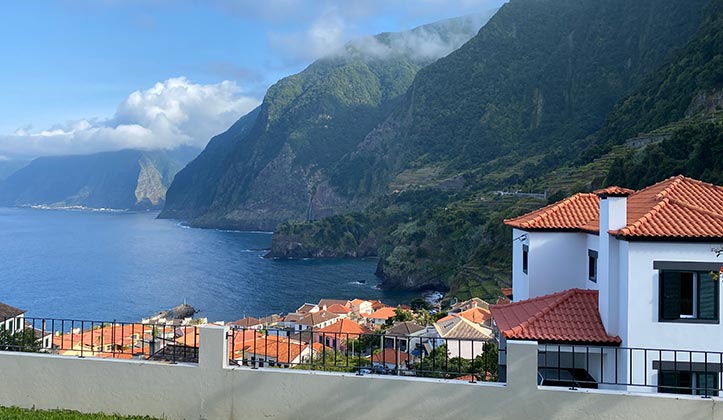
Madeira is an autonomous region of Portugal in the Atlantic Ocean, with Funchal as its capital. The island has long attracted property buyers because of its climate, views, tax history, tourism market and international profile. It is also famous as the birthplace of Cristiano Ronaldo, which probably does not hurt the island’s global recognition.
The Cardano property story involved Prometheus International Properties, a company focused on luxury real estate and blockchain-connected property concepts. The company said that the buyer paid in ADA for properties connected to its Madeira developments, with the overall deal value reported at approximately €4.1 million.
The interesting part was not only that ADA was used. It was that the transaction had to be made compatible with standard real estate requirements. In practice, that means the crypto payment still needed to be converted into a legally understandable purchase value, with identity checks and anti-money-laundering procedures completed before the property transfer could be registered.
Since the original Madeira Cardano transaction, the regulatory environment has changed significantly. The European Union introduced the Markets in Crypto-Assets Regulation (MiCA), creating a common framework for many crypto-asset service providers operating across member states. According to the European Securities and Markets Authority (ESMA), MiCA aims to improve transparency, investor protection and market integrity throughout the EU. ESMA provides a detailed overview of MiCA here.
Was this really paid in Cardano?
Based on the original reports, yes, Cardano was used as the payment asset. But for readers, the more useful question is how a transaction like this is handled legally.
Real estate does not become “outside the system” because the buyer uses crypto. The seller, lawyer, notary, bank, tax authority and real estate agent still need a clear paper trail. If the price is agreed in euros but paid using ADA, both sides need to understand the exchange rate, timing, volatility risk and who is responsible if the coin price moves before settlement.
That is why the Madeira transaction is best understood as a luxury property sale where crypto was accepted as the payment route, not as a replacement for the Portuguese property system.
Anyone considering a crypto-funded property purchase should also understand the compliance side of the transaction. Identity verification, source-of-funds documentation and anti-money-laundering checks remain essential regardless of whether payment is made in euros, Bitcoin or Cardano. This remains true in Portugal, where Banco de Portugal explains that crypto-assets are not legal tender and carry specific risks that consumers should understand before using them in major financial transactions.
Why did the Madeira Cardano sale matter?
The sale mattered because real estate is one of the hardest areas for crypto to enter. Buying a coffee with crypto is easy to imagine. Buying a multi-million-euro property requires identity checks, contracts, proof of funds, tax treatment and legal registration.
That makes property a useful test case. If a crypto payment can pass the checks needed for a luxury property purchase, it suggests that crypto can be used for more than trading and online payments — at least when the buyer, seller and professional advisers are willing to do the work properly.
It also showed that some property developers were prepared to accept digital assets from international buyers, especially in markets where wealthy crypto holders were already looking at lifestyle destinations such as Portugal, Madeira and other warm-weather regions.
Can you buy property in Portugal with crypto in 2026?
In principle, yes. In practice, it depends on the seller, the real estate agent, the bank, the lawyers and how the transaction is structured.
Portugal does not require every private seller to accept crypto. Crypto-assets are not legal tender in the same way as the euro, and Banco de Portugal warns that crypto-assets are volatile and do not carry the same protections as regulated money or bank deposits. The official view is not that crypto is banned, but that buyers need to understand the risks and compliance requirements.
For a property purchase, the common route is usually one of these:
| Crypto converted before purchase | The buyer sells crypto for euros first, then buys the property through the normal banking and notary process. |
| Seller accepts crypto directly | The buyer transfers crypto to the seller or an agreed structure, but both sides still document the euro value and complete compliance checks. |
| Hybrid structure | Part of the transaction may be handled in euros and part through crypto, depending on legal advice and seller acceptance. |
For most normal buyers, the first option is still the easiest. For larger transactions, direct crypto payment can be possible, but it needs experienced legal and tax advice before anything is sent.
What are the main risks?
Volatility: ADA, Bitcoin, Ethereum and other crypto-assets can move sharply in a short period. A property agreed at €4 million can become complicated if the crypto value changes before settlement.
Proof of funds: A buyer may have enough crypto, but still need to prove where it came from. Exchanges, banks, lawyers and real estate professionals may ask for trading records, wallet history and identity documents.
Tax treatment: A crypto payment can trigger tax questions. Selling or spending crypto may be treated differently depending on the buyer’s tax residence, holding period and structure. This should be checked before signing.
Banking friction: Even if the seller accepts crypto, banks may still ask questions when funds are converted into euros or moved into the traditional financial system.
Legal wording: The purchase agreement should be clear on whether the price is fixed in euros, fixed in crypto, or calculated at a specific exchange rate on a specific date.
How does EU regulation affect crypto property deals?
Since the original Madeira Cardano story, the regulatory environment has changed. The EU’s Markets in Crypto-Assets Regulation, known as MiCA, created a more harmonised framework for crypto-asset issuers and crypto-asset service providers across the European Union. ESMA describes MiCA as introducing uniform EU rules for crypto-assets not already covered by existing financial services law.
That does not mean every crypto property deal is automatically simple or risk-free. It does mean that crypto firms operating in the EU face a more formal regulatory environment than they did during the earlier part of the market. For buyers, the practical takeaway is simple: use properly documented payment routes and avoid casual wallet-to-wallet arrangements for large real estate deals.
Banco de Portugal also notes that crypto-assets are not real currency and that supervision in Portugal has focused heavily on anti-money-laundering and terrorist-financing prevention. In other words, the compliance side is not optional just because the payment asset is digital.
Useful official reading: ESMA explains the EU’s MiCA framework for crypto-assets, while Banco de Portugal provides consumer information on crypto-assets, their risks and how they differ from legal tender.
What does this mean for Cardano?
The Madeira sale was a good publicity moment for Cardano. It showed that ADA could be used in a large real-world transaction, at least when both parties agreed and the compliance process was handled.
But one property sale does not prove that ADA will become a mainstream real estate payment currency. For that to happen, buyers and sellers need more than enthusiasm. They need liquidity, stable pricing, clean documentation, easier tax treatment, and professionals who are comfortable handling crypto payments.
Cardano supporters can fairly point to the Madeira deal as an example of real-world use. More cautious readers should treat it as an interesting case study rather than proof that property purchases with ADA are about to become common.
What should crypto buyers ask before trying this?
Will the seller accept crypto directly? Many sellers still prefer euros, even if they are open to crypto buyers.
Who handles the conversion risk? The contract should say what happens if ADA, BTC or another coin moves before completion.
Can you prove the source of funds? Large crypto gains may still need exchange statements, wallet records and tax documentation.
Which professionals are involved? Use a lawyer, accountant and real estate agent who understand both Portuguese property purchases and crypto compliance.
Is the final deed priced in euros? In Portugal, the official property documentation will normally need a clear euro value for tax and registration purposes.
Final view from Crypto Lists
The Madeira Cardano property sale was an early and genuinely interesting example of crypto moving into the real estate world. It was not just another exchange listing or speculative price story. It involved a physical asset, a luxury property developer, legal checks and a multi-million-euro valuation.
However, the lesson is not that buying property with crypto is now easy. The real lesson is that crypto can be used in serious transactions when the legal, tax and compliance work is done properly.
For crypto holders looking at Portugal, Madeira or other sunny property markets, the smart approach is to think like an investor first and a crypto fan second. Check the property, check the seller, check the tax consequences, document the source of funds and never assume that a blockchain transfer replaces professional advice.
Crypto can open doors in real estate. It can also create expensive problems if handled casually. The Madeira ADA sale was a milestone, but anyone trying something similar in 2026 should treat it as a structured property transaction, not just a crypto payment.
FAQ
Can you buy property in Portugal with crypto?
Yes, it can be possible if the seller accepts it and the transaction is structured correctly. However, the deal still needs normal legal documentation, identity checks, source-of-funds checks and a clear euro value for tax and registration purposes.
Was property in Madeira really bought with Cardano?
Prometheus International Properties reported that two luxury properties in Madeira, worth around €4.1 million combined, were paid for using Cardano. It became one of the best-known examples of ADA being used in a real estate transaction.
Is crypto legal tender in Portugal?
No. Crypto-assets are not legal tender like the euro. They can be used if both parties agree, but they do not have the same legal status or consumer protections as official currency.
What is the safest way to buy property with crypto?
The safest route is usually to use experienced legal and tax advisers, agree the price clearly in euros, document the crypto source of funds, and decide in advance who carries the exchange-rate risk before completion.
Does MiCA make crypto property purchases easier?
MiCA creates a clearer regulatory framework for crypto-asset service providers in the EU, but it does not remove the normal legal, tax and anti-money-laundering requirements involved in buying property.