
·📅 26 Jun 2022·🔄 Updated: 12 Jun 2026
When Solana first revealed its Saga smartphone, it sounded like an ambitious bet: could a blockchain ecosystem build a real mobile device for Web3 users, not just another wallet app? Looking back from 2026, the answer is more interesting than the original launch story. Saga shipped, Seeker followed, and Solana Mobile has turned the idea into a broader mobile stack for crypto apps, wallets and Android hardware partners.
The original article was written before Saga reached users. At that point, the story was mostly about a future Web3 phone, Solana Mobile Stack and the dream of making self-custody easier on mobile. Since then, Solana Mobile has moved beyond a single phone launch. Its documentation now describes Solana Mobile Stack as the hardware, software and onchain system powering Solana Mobile, including the dApp Store, Mobile Wallet Adapter, Seed Vault, Seeker, SKR and Seeker Genesis Token.
Crypto Lists view: Saga did not turn every smartphone user into a crypto power user. But it proved something important: crypto mobile hardware can create real demand when it combines secure key handling, exclusive dApps, rewards, payments and a strong ecosystem.
Why Solana built a Web3 phone
For years, crypto users did most serious self-custody activity on desktop. They installed browser wallets, connected hardware wallets, signed transactions, minted NFTs, used DeFi apps and managed tokens through a computer.
Mobile was always awkward. A phone is where users live, but crypto security and mobile UX have often been uncomfortable together. Wallet connections can be confusing. Seed phrases are dangerous to copy. App stores are restrictive. Signing transactions on the move can feel risky.
Solana’s idea was to reduce that friction. If crypto activity is going mobile, the phone should not treat wallets and dApps as strange add-ons. They should feel native, secure and easy to use.
That is why the Saga story still matters in 2026. It was not only about one handset. It was about whether a blockchain ecosystem could build mobile infrastructure that normal Android users, developers and hardware makers could actually use.
Solana bridging the gap in mobile self-custody crypto experiences
Self-custody is powerful, but it is also unforgiving. If a user loses a seed phrase, approves a bad transaction or signs with the wrong wallet, there may be no bank support desk to reverse the mistake.
Solana Mobile tried to improve this experience through hardware-level key custody and mobile-first wallet infrastructure. The idea was to let users interact with tokens, NFTs, DeFi, payments and dApps from a phone while keeping private keys better protected than a normal app-only wallet.
This is where Seed Vault became important. Solana Mobile describes Seed Vault as hardware-level secure key custody built into every Seeker device. In the broader Solana Mobile Stack, Seed Vault is paired with the Mobile Wallet Adapter and Solana dApp Store to make mobile dApp interaction easier.
Crypto Lists note: This does not make a Web3 phone risk-free. Users can still approve bad transactions, fall for phishing, install risky apps or mishandle recovery. But secure hardware key handling is a better foundation than treating private keys like ordinary app data.
Saga and Solana Mobile Stack Launch
Solana Mobile, a subsidiary of Solana Labs, introduced Saga in 2022 as a flagship Android phone tightly integrated with the Solana blockchain. The official reveal described Saga as a device designed to make it easier and safer to transact in Web3 and manage digital assets such as tokens and NFTs.
The original hardware pitch was strong for the time. Saga included a 6.67-inch display, 512 GB storage and 12 GB RAM. Solana Mobile’s current technical documentation lists Saga with an AMOLED display, Snapdragon 8+ Gen 1, 512 GB UFS storage, 12 GB LPDDR5 RAM, IP68 rating, wireless charging and dual rear cameras.
But the phone itself was only half the story. The more important long-term piece was Solana Mobile Stack, usually called SMS. It gave developers a mobile wallet adapter, dApp distribution and secure key-management tools for Android-based crypto experiences.


Supply: 307,782,016 / 511,216,000
Release date: April 10, 2019
Description: Are you holding any Solana coins on your new smartphone? Learn all about Solana here.
Risk warning: Trading, buying or selling crypto currencies is extremely risky and not for everyone. Do not risk money that you could not afford to loose.
What is Solana Mobile Stack?
Solana Mobile Stack is the set of tools behind Solana’s mobile crypto experience. In 2026, Solana Mobile documentation presents it as a combination of software, hardware and onchain elements.
dApp Store: A crypto-friendly app store for Solana ecosystem apps.
Mobile Wallet Adapter: A protocol that connects mobile dApps to wallets.
Seed Vault: Hardware-level secure key custody for Solana Mobile devices.
Seeker Genesis Token: A non-transferable token connected to Seeker device ownership and access to ecosystem experiences.
SKR: The native asset designed to power the Solana Mobile ecosystem.
This is a more mature story than the original Saga announcement. Solana Mobile is no longer only saying “we built a phone”. It is saying “we built a mobile crypto stack that can extend to other devices and manufacturers”.
From Saga to Seeker
Saga was the first major experiment. Seeker is the follow-up that shows Solana Mobile wanted to turn the experiment into an ecosystem.
Solana Mobile’s Seeker page describes the device as a way to access payments, DeFi, AI, DePIN, NFTs and gaming from a phone, including exclusive dApps in the Solana dApp Store 2.0. It also highlights a Seed Vault Wallet, fingerprint access, double-tap transactions and a non-transferable Genesis Token for device ownership.
The shift matters. Saga was a flagship Web3 phone. Seeker is positioned more like a broader ecosystem device, with rewards, identity, dApps and mobile crypto activity tied together.
Crypto Lists view: This is the strongest part of the Solana Mobile story. The phone is not just hardware. It becomes an access point to rewards, apps, identity and onchain behaviour. That is what Apple and Google do with mobile ecosystems, but Solana is trying to do it with crypto-native rails.
What went wrong with the old launch narrative?
The original article included FTX as one of the ecosystem partners and quoted Sam Bankman-Fried at the launch event. That was normal at the time, because FTX was still a major crypto company. In hindsight, it is now a reminder of how quickly crypto changes.
FTX collapsed in late 2022 and should no longer be treated as a positive ecosystem signal. The fact that Saga and Solana Mobile continued after FTX is actually more important than the original partner list.
The old article also described Saga as available from Q1 2023 and framed the device mainly as an upcoming phone. That is outdated. The useful 2026 angle is whether Solana Mobile turned the original Saga idea into something more durable.
Crypto Lists update: The FTX-era launch context should be preserved only as history, not as a recommendation or credibility point.
How will Solana’s new mobile ecosystem look?
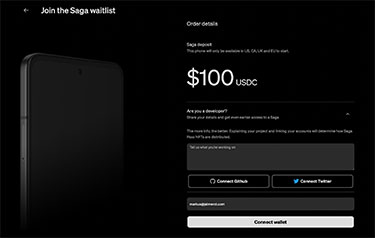
In 2026, the Solana Mobile ecosystem is less about one phone and more about a mobile pathway into Solana. That includes phones, wallet infrastructure, dApp access, secure key custody, mobile rewards and potentially integration with other hardware manufacturers.
In March 2026, Solana Mobile announced that it was bringing Solana Mobile Stack to Android hardware manufacturers at Mobile World Congress. The announcement said Solana Mobile had shipped over 200,000 devices across Saga and Seeker and that users had generated more than $5 billion in onchain transaction volume.
Those are the kinds of figures that make the project harder to dismiss as a gimmick. It still remains niche compared with iPhone or Samsung Galaxy sales, but it is no longer just a concept phone for crypto conferences.
What Solana Mobile gets right
Mobile-first crypto UX: Crypto needs to work where people actually spend time: on phones.
Hardware-level security: Seed Vault gives Solana Mobile a stronger self-custody story than a normal software wallet alone.
dApp distribution: A crypto-friendly app store can help developers reach users without relying only on traditional app-store rules.
Ecosystem rewards: Saga and Seeker showed that device ownership can become part of onchain identity and reward distribution.
Developer focus: Solana Mobile Stack gives builders tools to create mobile crypto apps rather than forcing them to work around mobile limitations.
What still needs to improve
Solana Mobile is promising, but it is not automatically mainstream. The biggest challenge is not only hardware. It is whether enough normal users need a crypto-first phone instead of a standard phone with good wallet apps.
Security also remains a concern. Better key storage helps, but it does not prevent social engineering, malicious dApps, bad transaction approvals or user mistakes.
There is also a risk that rewards and airdrop expectations distort demand. Some Saga buyers were rewarded handsomely by ecosystem airdrops, which created attention. But a mobile ecosystem cannot depend only on people buying phones for potential token rewards. It needs real daily use.
Crypto Lists view: Solana Mobile will be more convincing if users keep using the devices for payments, DeFi, gaming, DePIN, NFTs and AI apps after the reward excitement fades.
Final view from Crypto Lists
The original Saga article was right about one thing: crypto needed to become more mobile. What it could not know at the time was whether Solana Mobile would ship, survive the FTX-era market crash and expand beyond one device.
By 2026, the project has become more credible. Saga shipped, Seeker followed, the dApp Store expanded, Seed Vault became a central security feature, and Solana Mobile Stack is now being offered to other Android hardware makers.
That does not mean everyone needs a Solana phone. Most crypto users will still use standard phones with wallet apps. But for active Solana users, developers, DePIN participants, NFT collectors and mobile-first DeFi users, Solana Mobile is one of the most serious attempts to make Web3 work natively on a smartphone.
The bigger lesson is simple: crypto adoption will not happen only through desktop wallets and exchange accounts. If digital assets are going mainstream, mobile UX must improve. Solana Mobile is one of the clearest experiments in that direction.
FAQ: Solana Saga, Seeker and Solana Mobile
What was Solana Saga?
Solana Saga was a flagship Android smartphone introduced by Solana Mobile to bring Solana wallets, dApps, NFTs and Web3 activity into a mobile-first device.
What is Solana Seeker?
Seeker is Solana Mobile’s follow-up device, designed around the Solana dApp Store, Seed Vault Wallet, onchain rewards, DePIN, AI, NFTs, gaming and mobile crypto use.
What is Solana Mobile Stack?
Solana Mobile Stack is the software, hardware and onchain framework behind Solana Mobile, including the dApp Store, Mobile Wallet Adapter, Seed Vault, Seeker Genesis Token and SKR.
Is a Solana phone safer than a normal crypto wallet?
It may offer stronger hardware-level key custody through Seed Vault, but it does not remove all risks. Users still need to avoid scams, malicious apps and careless transaction approvals.
Does everyone need a Solana phone?
No. Most users can still access crypto through normal smartphones and wallet apps. Solana Mobile is more relevant for active Solana users, developers and people who want deeper mobile Web3 integration.