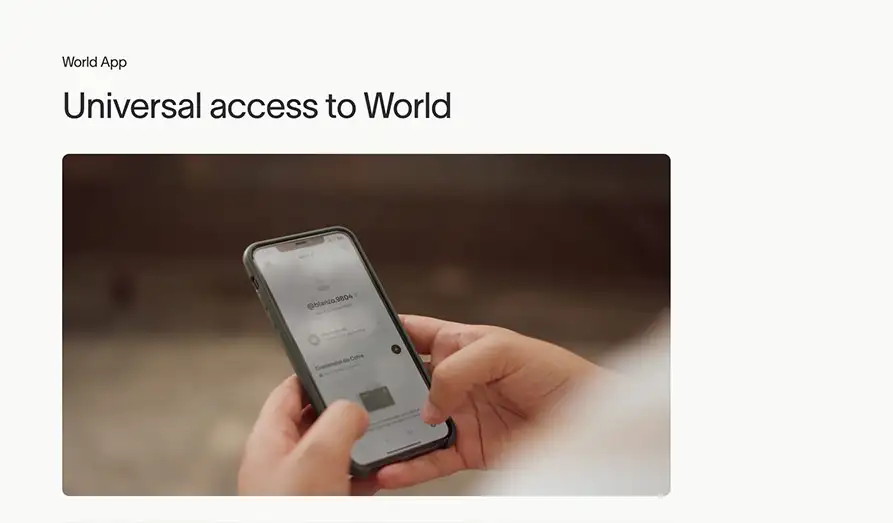


Worldcoin has changed a lot since the original article was published. It is no longer just a “free crypto for an iris scan” story. In 2026, the project is better understood as an attempt to build proof of human identity for the AI age.
The project is now generally branded as World, while Worldcoin (WLD) remains the token connected to the network. The basic idea is simple but controversial: prove that a user is a unique human, then let that person access a digital identity system called World ID and, where available, claim or use WLD tokens.
That vision sounds useful in a world of bots, fake accounts, deepfakes and AI-generated content. It also raises obvious questions. Should a crypto project be involved in biometric identity? What happens to the data? Is WLD a serious long-term asset, a risky token, or mainly a reward mechanism for joining the network?
This updated guide looks at Worldcoin from a 2026 perspective: what it is, how World ID works, why the Orb matters, where the risks are, and why users should separate the identity technology from the WLD token before making any decision.
Go directly to
- 1 What Exactly Is Worldcoin?
- 2 Who Invented Worldcoin?
- 3 Is It Really That Simple?
- 4 Is Worldcoin More Secure Than Other Crypto Ventures?
- 5 What Are the Main Risks With Worldcoin?
- 6 Is Worldcoin a Short- or Long-Term Prospect?
- 7 Should You Verify With the Orb?
- 8 Final Thoughts: What Is the Deal With Worldcoin?
- 9 FAQ: Worldcoin, World ID and WLD
What Exactly Is Worldcoin?
Worldcoin started as a crypto project connected to digital identity and financial access. Today, the wider project is usually called World. Its main products are World ID, World App, the Orb verification device and the WLD token.
World ID is the identity layer. It is designed to prove that a user is a real, unique human without requiring them to reveal their full real-world identity every time they use an online service.
WLD is the token. According to the official World site, WLD is the native token of the World network and may be used in apps, protocols and services built inside the ecosystem. Availability depends on location, age and other eligibility rules, so users should not assume that everyone can claim or use it in the same way.
That distinction matters. You can be interested in the idea of proof-of-human identity without automatically being bullish on the token. Likewise, WLD may trade like a speculative crypto asset even if the identity technology becomes useful.
Worldcoin (WLD) therefore sits in a slightly unusual category. It is part crypto token, part identity network and part bet on how important human verification becomes as AI-generated activity increases online.
Who Invented Worldcoin?
Worldcoin was co-founded by Sam Altman, Alex Blania and Max Novendstern. The project is associated with Tools for Humanity and the World Foundation, with the broader goal of creating a global identity and financial network for verified humans.
The timing is important. Since 2023, the public conversation around AI has moved quickly. Fake users, bot farms, synthetic media and automated accounts are no longer abstract problems. That gives World a clearer use case than it had when many people first heard about it.
At the same time, the project has also attracted regulatory scrutiny and privacy criticism. That is not a small detail. Any system built around biometric verification needs a higher level of trust than a normal crypto wallet or app.
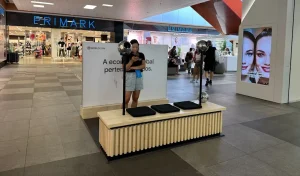
The Worldcoin stand in a shopping mall in Portugal
Editor note: We have seen Worldcoin stands in real locations, including Portugal. The project is not just a whitepaper or online token launch. It has involved physical verification points, staff, queues, devices and real users handing over sensitive biometric information. That makes the privacy discussion much more practical than theoretical.
Is It Really That Simple?
No. The simple version is that users download World App, verify that they are a unique human and, where eligible, may access World ID and WLD. The complicated part is how that verification happens and whether users are comfortable with it.
The most famous verification method is the Orb, a physical imaging device that scans a user’s face and eyes to verify uniqueness. World says the Orb captures and processes photos to verify uniqueness, encrypts data, and is designed so captured images are deleted after processing. Its help center explains the process in more detail here: how the Orb works.
The key word is iris, not retina. Many older articles, including plenty of early coverage of Worldcoin, loosely described the process as a retinal scan. In practice, the Orb is associated with iris-based biometric verification.
World’s argument is that this type of proof is needed because normal online accounts are too easy to duplicate. Email addresses, phone numbers and social media profiles can all be mass-produced. A biometric proof-of-personhood system is meant to make it harder for one person or bot network to pretend to be thousands of unique users.
The user concern is just as obvious: biometric data is not like an email address. If you lose control of a password, you can change it. If a system involving biometric identity goes wrong, the consequences feel more permanent.
Is Worldcoin More Secure Than Other Crypto Ventures?
It depends what you mean by secure.
From a proof-of-human perspective, World is trying to solve a genuine problem. AI has made it easier to create fake accounts, fake engagement and fake identities online. A privacy-preserving proof-of-personhood system could become useful for apps, voting systems, ticketing, social platforms, airdrops and anti-bot protection.
From a data and trust perspective, World is also asking users to accept a very unusual trade-off. The project says it is designed to protect privacy, but regulators in several countries have questioned whether the collection and processing of biometric data is justified, transparent and compliant with local privacy laws.
For example, Hong Kong’s privacy regulator ordered Worldcoin to stop operations in 2024, saying the collection of iris and face images was unnecessary and excessive. You can read more about that enforcement action in this Reuters report. That kind of action does not automatically mean the technology is bad, but it shows why users should treat the project as sensitive and not just another crypto app.
Our view: Worldcoin is not automatically more secure simply because it uses advanced technology. It may be more resistant to fake accounts, but users still need to think carefully about biometric privacy, token risk, regulatory uncertainty and whether they personally need the service.
What Are the Main Risks With Worldcoin?
| Risk | Why it matters | What users should check |
|---|---|---|
| Biometric privacy | Iris-based verification is more sensitive than normal account signup. | Read how images, encrypted codes and deletion are handled before verifying. |
| Regulation | World has faced restrictions or investigations in several countries. | Check whether World App, Orb verification and WLD are available in your location. |
| Token supply | WLD may be affected by unlocks, distribution schedules and market sentiment. | Do not judge the project only by token price or hype. |
| Use-case uncertainty | Proof of human identity may become important, but adoption is not guaranteed. | Look for real integrations, not just future promises. |
| Personal need | Not everyone needs to verify with a biometric identity network. | Ask whether the benefit is worth the privacy trade-off for you. |
Is Worldcoin a Short- or Long-Term Prospect?
Can World ID help prove who is human online?
Worldcoin is not a simple short-term crypto story anymore.
In the short term, WLD can still behave like any other volatile crypto token. Price movements may depend on unlock schedules, exchange liquidity, regulatory headlines, market cycles, AI narratives and general risk appetite.
In the long term, the more important question is whether proof of human identity becomes a major internet layer. If apps, ticketing platforms, games, social networks or financial services start using World ID or similar systems, the project could become much more meaningful than a speculative token.
That does not make WLD a safe investment. It simply means the project should be judged on adoption, privacy safeguards, regulatory progress and real-world integrations rather than only on whether the token price rises after a news cycle.
Crypto Lists is not making a price prediction here. The stronger conclusion is that Worldcoin is one of the more interesting and controversial crypto identity projects to watch, especially as AI makes proof of personhood more relevant.
Should You Verify With the Orb?
This is a personal decision, not something to do casually because a token reward looks attractive.
If you are considering Orb verification, read the official privacy information first, check whether the service is available legally in your country, understand what data is captured, and think about whether you actually need World ID.
It is also worth separating two decisions:
Using World ID: This is about digital identity and proof of personhood.
Buying or holding WLD: This is a crypto investment decision with market, tokenomics and regulatory risk.
Those two things are connected, but they are not identical. A user may find World ID useful without wanting to speculate on WLD. Another user may trade WLD without ever using the identity network. Mixing those decisions together is where many people get confused.
Final Thoughts: What Is the Deal With Worldcoin?
Worldcoin is no longer just a strange crypto story about eye scans. It is now part of a bigger debate about AI, identity, privacy and how the internet can tell humans apart from machines.
The bullish case is easy to understand. If proof of personhood becomes important, World has built one of the most visible systems in the sector. The project has strong branding, major backers, a live token and a real-world verification network.
The cautious case is just as important. Biometric identity is sensitive, regulators are watching closely, token economics matter, and users should not treat free crypto as a reason to ignore privacy questions.
Our updated view is balanced: Worldcoin is worth understanding, but not worth blindly trusting. Read the official documentation, follow regulatory developments, and never treat WLD as a guaranteed long-term winner simply because the project is connected to AI, identity or Sam Altman.
For readers who want to follow the token itself, our Worldcoin page tracks WLD as part of the wider crypto market. For everyone else, the most important takeaway is simpler: proof of human identity may become important, but the trade-offs deserve serious attention.
FAQ: Worldcoin, World ID and WLD
Is Worldcoin still called Worldcoin? The wider project is now generally branded as World or World Network, while WLD remains the Worldcoin token connected to the ecosystem.
Does the Orb scan your retina? It is more accurate to describe the process as iris-based biometric verification. Older articles sometimes used the phrase retinal scan loosely.
Can everyone claim WLD? No. WLD availability depends on geography, age, eligibility rules and local restrictions. Users should check the official terms before assuming they can claim tokens.
Is Worldcoin safe? It depends on your risk tolerance. The project says it uses privacy-preserving technology, but biometric verification has attracted regulatory scrutiny. Users should read the privacy information before verifying.
Is WLD a good investment? WLD is a volatile crypto asset. Its future depends on adoption, regulation, token supply, market conditions and whether World ID becomes widely used. This article is not investment advice.