
·📅 29 Nov 2023·🔄 Updated: 11 Jun 2026
Anonymous casinos and decentralized casinos are often confused, but they are not the same thing.
Both appeal to players who want more privacy, faster crypto payments and fewer banking delays. However, the way they work is very different. A no-KYC casino is usually run by a normal casino operator but allows faster registration with limited verification. A decentralized casino uses blockchain technology, wallets and sometimes smart contracts to reduce the role of the operator itself.
This guide explains the difference in plain English, including where the terms overlap, where they do not, and what players should check before depositing.
Go directly to
- 1 Anonymous vs Decentralized Casinos: Quick Answer
- 2 In The Beginning…
- 3 Real Money & Centralized Crypto Casinos
- 4 Behind the Mask: No-KYC Casinos
- 5 Decentralized Casinos: The Next Step Forward?
- 6 A Tale of Transparency
- 7 Key Similarities
- 8 No-KYC Casinos vs Decentralized Casinos: Key Differences
- 9 Which Type of Casino Should You Choose?
- 10 Putting it All Together
- 11 FAQ: Anonymous, No-KYC and Decentralized Casinos
Anonymous vs Decentralized Casinos: Quick Answer
An anonymous casino is usually better described as a no-KYC casino. It may let players register with only an email address or crypto wallet, but the casino operator still controls the platform, payments, support and game lobby.
A decentralized casino is different. It normally uses blockchain technology, wallet connections and, in some cases, smart contracts to handle deposits, bets, payouts or game fairness. The casino experience may be less polished, but the blockchain element can add transparency.
Editor note 2026: One of the biggest mistakes players make is assuming that “anonymous” means “no verification ever”. During our casino reviews, we have seen many sites market themselves as anonymous while still reserving the right to request documents later. That is why we now focus more on practical no-KYC details: registration requirements, withdrawal rules, country restrictions and real payment testing.
| Feature | No-KYC Casino | Decentralized Casino |
|---|---|---|
| Account setup | Usually email and password | Often wallet connection |
| KYC | Often not required at signup, but may be requested later | Usually limited, depending on setup |
| Operator | Casino company controls the site | Blockchain or smart contracts may handle key parts |
| Games | Often thousands of slots, live games and table games | Usually fewer games, often crypto-native or provably fair |
| Support | Normally live chat or email support | Can be limited or community-based |
| Main risk | Verification or withdrawal rules may appear later | Less support, less regulation and more technical responsibility |
In The Beginning…
Online casinos originally relied on traditional payment methods: bank transfers, debit cards, credit cards and e-wallets. These made online gambling easy to access, but they also introduced delays, fees, chargebacks, blocked payments and identity checks.
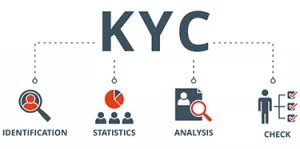
KYC can involve checking identity, address, payment details and account activity.
For regulated casinos, KYC is not just bureaucracy. It helps prevent fraud, identity theft, underage gambling and money laundering. The problem for players is that KYC can also slow down withdrawals, especially when documents are rejected, support queues are long or the casino asks for extra proof after a win.
Cryptocurrency changed the payment side of the equation. Wallet-to-wallet transfers made it possible to deposit and withdraw without relying on banks in the same way. That opened the door for crypto casinos, no-KYC casinos and eventually more decentralized gambling models.
The important point is this: crypto payments can improve speed and privacy, but they do not automatically make a casino anonymous or decentralized.
Real Money & Centralized Crypto Casinos
Most online casinos are still centralized. This includes traditional real-money casinos and most crypto casinos.
A centralized casino has an operator behind it. The operator controls the player accounts, game lobby, payment system, bonuses, withdrawals, customer support and compliance process. This can be good or bad depending on the quality of the casino.
The advantage is that players usually get a more familiar experience. There may be thousands of games, live dealer tables, mobile support, bonuses, customer service and some form of licensing. If something goes wrong, there is normally a company to contact.
The disadvantage is control. The casino can decide when to approve withdrawals, when to request verification, which countries to block and which payment methods to support.
Main advantage: Bigger game libraries, customer support and a more familiar casino experience.
Main drawback: The operator controls withdrawals, verification and account decisions.
This is why players interested in privacy often look beyond traditional centralized casinos and search for no-KYC crypto casinos instead.
Behind the Mask: No-KYC Casinos

No-KYC casinos are usually what players mean when they search for anonymous casinos.
These sites often allow fast registration with only an email address, password or crypto wallet. Some do not ask for a phone number. Some allow small or normal withdrawals without document checks. This can be useful for players who value privacy or simply dislike slow verification processes.
However, the term “anonymous casino” can be misleading. Many no-KYC casinos still include terms that allow them to request documents in specific cases, such as suspected fraud, bonus abuse, sanctions checks, duplicate accounts, unusually large withdrawals or compliance reviews.
That is why we prefer to separate three different claims:
No-KYC signup: You can open an account without documents.
No-KYC withdrawals: You can withdraw without documents, at least under normal conditions.
Fully anonymous play: The casino asks for very little personal information and does not normally connect the account to a real-world identity.
A good example to check is our Cryptorino review, where registration required only an email address during testing. We also looked at the payment flow and withdrawal handling, because those details matter more than a casino simply calling itself anonymous.
Main advantage: Fast signup, fewer personal details and a smoother crypto-first experience.
Main drawback: No-KYC does not always mean no verification forever. Always read the withdrawal and verification terms before depositing.
How To Avoid Annoying Casino KYC Requirements?
The best way to avoid KYC surprises is to check the boring details before you play.
Read the withdrawal terms: Look for daily, weekly and monthly withdrawal limits.
Check the verification policy: See when the casino says it may request documents.
Look at restricted countries: A no-KYC casino may still block players from certain regions.
Test small first: If you are unsure, start with a small deposit and withdrawal before risking more.
Crypto Lists is not against KYC. Verification has a legitimate role in preventing fraud and financial crime. The issue is transparency. Players should know when verification may happen before they deposit, not only after they win.
A Liberating New Path
No-KYC casinos became popular because they remove friction from the gambling experience. Players can often register quickly, deposit with crypto and start playing without scanning passports, uploading utility bills or waiting days for account approval.
That convenience is the main attraction. It is not about hiding from basic rules. It is about avoiding unnecessary data collection, slow banking rails and clumsy verification systems when a player simply wants to use crypto for entertainment.
The best no-KYC casino reviews should therefore explain more than bonuses. They should explain registration requirements, supported coins, withdrawal speed, withdrawal limits, VPN rules, country restrictions and whether the casino has a history of paying players properly.
Decentralized Casinos: The Next Step Forward?
Decentralized casinos take a different approach.
Instead of relying entirely on a traditional casino account, many decentralized casinos use crypto wallets, blockchain transactions and smart contracts. In some cases, players connect a wallet such as MetaMask rather than creating a normal username and password account.
The idea is to reduce the role of the casino operator. Deposits, bets, payouts or game fairness may be handled partly on-chain. This can make some parts of the gambling process more transparent.
However, decentralized casinos are not automatically safer or better. Many have smaller game libraries, fewer live casino options, weaker support and more technical complexity. Players also need to understand wallet security, transaction fees and blockchain risks.
Main advantage: More transparency and a more crypto-native experience.
Main drawback: Less hand-holding, fewer mainstream games and limited consumer protection if something goes wrong.
Not Every “Decentralized” Casino Is Truly Decentralized
One of the biggest misconceptions in crypto gambling is that every casino using the word “decentralized” actually operates in a fully decentralized way.
In reality, many so-called decentralized casinos still rely on centralized infrastructure for important parts of the experience. Customer support, game management, bonus systems, marketing, website hosting and even certain payment processes may still be controlled by a traditional company.
Some platforms allow wallet-based registration and blockchain deposits while remaining largely centralized behind the scenes. Others use smart contracts for specific functions but still depend on a central team for day-to-day operations.
Editor note: When reviewing decentralized casinos, we look beyond the marketing language. The more useful question is not whether a casino calls itself decentralized, but which parts of the platform are actually decentralized and which parts still depend on a central operator.
This distinction matters because players often assume decentralization automatically means greater transparency, fairness or anonymity. In practice, the reality is usually more nuanced.
A Tale of Transparency
The strongest argument for decentralized casinos is transparency.
In a traditional casino, players must trust the operator, the game provider and the payment system. In a blockchain-based casino, some parts of that process can be verified directly through public transactions or provably fair mechanics.
This is where provably fair games matter. They allow players to check that game outcomes were not changed after the bet was placed.
That does not remove the house edge. It also does not guarantee that every decentralized casino is trustworthy. Smart contracts can contain bugs, teams can disappear, liquidity can be weak and support can be minimal.
In simple terms, decentralized casinos may reduce some operator-related risks, but they can introduce technical risks that normal casino players are not used to managing.
Key Similarities
No-KYC casinos and decentralized casinos overlap in several ways.
Crypto-first payments: Both usually rely on cryptocurrency rather than bank cards or e-wallets.
Privacy focus: Both attract players who want less personal data collection.
Fast transactions: Both can offer faster deposits and withdrawals than traditional banking methods.
Different trust model: Both move away from the old system where banks, card processors and casino finance teams control every step.
The overlap is real, but it does not make the two categories identical.
No-KYC Casinos vs Decentralized Casinos: Key Differences
| Question | No-KYC Casino | Decentralized Casino |
|---|---|---|
| Who runs it? | Usually a casino operator or company. | Often a blockchain project, DAO-style structure or smart-contract-based platform. |
| How do you register? | Email, password or simple account form. | Wallet connection is common. |
| Are there many games? | Usually yes, including slots and live casino games. | Often fewer games, with more in-house or blockchain-native titles. |
| Is it licensed? | Sometimes, depending on the operator. | Often less clear or not licensed in the traditional way. |
| What is the main benefit? | Convenience and privacy. | Transparency and crypto-native control. |
| What is the main risk? | KYC or withdrawal checks may appear later. | Technical risk, weak support or unclear accountability. |
Which Type of Casino Should You Choose?
Choose a no-KYC casino if you want a familiar casino experience with faster registration, crypto payments, normal support and a wider selection of slots, live casino games and bonuses.
Choose a decentralized casino if you care more about wallet-based play, on-chain transparency and provably fair mechanics than a large game library or traditional customer support.
Neither option is perfect. A no-KYC casino can still request documents later. A decentralized casino can still have bugs, poor liquidity or limited support. The best choice depends on what you value most: convenience, privacy, transparency, game choice or control of funds.
Putting it All Together
Anonymous casinos and decentralized casinos are connected, but they should not be treated as the same thing.
The more accurate 2026 wording is usually no-KYC casino rather than anonymous casino. These sites may let players register quickly and play with crypto, but players should still check withdrawal rules and verification terms.
Decentralized casinos go further by using blockchain infrastructure, wallet connections and smart contracts. That can improve transparency, but it can also make the experience more technical and less familiar.
The best advice is simple: do not rely on marketing labels. Check how registration works, how withdrawals work, what the terms say, who controls the funds, what games are available and whether the casino has been properly reviewed or tested.
For players, the real question is not only whether a casino is anonymous or decentralized. The real question is whether it is clear, fair, fast enough and trustworthy enough before you deposit.
FAQ: Anonymous, No-KYC and Decentralized Casinos
Are anonymous casinos and no-KYC casinos the same? Not always. Many anonymous casinos are better described as no-KYC casinos because they reduce verification during signup. However, some may still request documents later.
Are decentralized casinos always anonymous? No. A decentralized casino may not require a traditional account, but blockchain transactions can still be visible publicly. Wallet privacy depends on how the player uses crypto.
Are no-KYC casinos legal? That depends on the casino, the player’s country and the operator’s licence. Players should always check local rules and casino restrictions before playing.
Do decentralized casinos have better odds? Not automatically. Some offer provably fair games, but the house edge still exists. Transparency does not mean the player has an advantage.
Which is safer: no-KYC or decentralized? Neither is automatically safer. No-KYC casinos may offer better support and more games, while decentralized casinos may offer more transparency. The safest option is the one with clear terms, reliable payments and a strong track record.