

Who Is Satoshi Nakamoto? What We Really Know
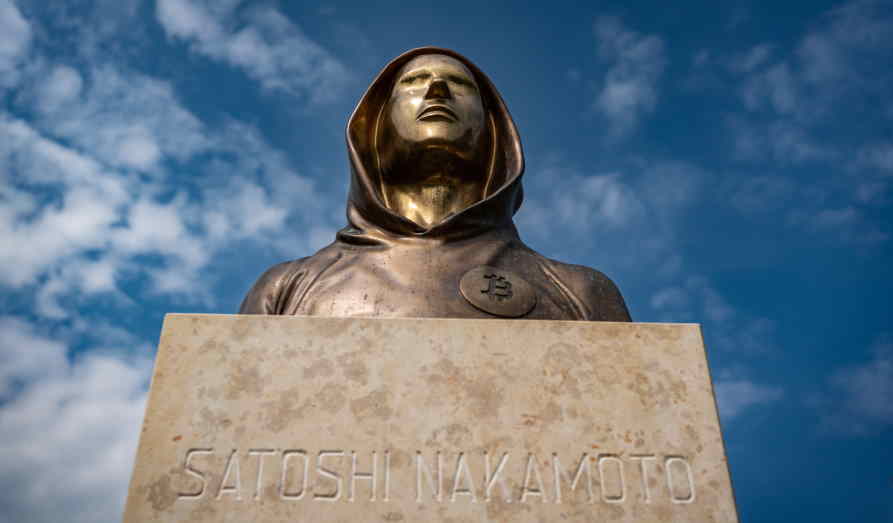
Satoshi Nakamoto is the pseudonym used by the creator of Bitcoin, but more than 17 years after the publication of the Bitcoin whitepaper, nobody has conclusively proven who that person—or group of people—actually is.
Few figures have had a larger impact on finance, technology and digital ownership while remaining completely anonymous. Despite countless investigations, documentaries, lawsuits and media reports, the identity of Bitcoin’s creator remains one of the biggest mysteries in modern technology.
This guide looks at what we actually know about Satoshi Nakamoto, the strongest theories, why anonymity may have been intentional, and why Bitcoin’s success may ultimately matter more than its creator’s identity.
Quick Facts About Satoshi Nakamoto
Whitepaper Published: October 31, 2008
Bitcoin Launch: January 3, 2009
Last Known Public Communication: 2011
Estimated Bitcoin Holdings: Around 1 million BTC (unconfirmed)
Identity: Still unknown as of 2026
How Satoshi Nakamoto Introduced Bitcoin
The story begins in 2008 when a person using the name Satoshi Nakamoto published the Bitcoin whitepaper titled “Bitcoin: A Peer-to-Peer Electronic Cash System.”
Go directly to
- 1 Who Is Satoshi Nakamoto? What We Really Know
- 1.1 How Satoshi Nakamoto Introduced Bitcoin
- 1.2 Why Was Bitcoin Different?
- 1.3 Why Did Satoshi Disappear?
- 1.4 How Much Bitcoin Does Satoshi Own?
- 1.5 The Most Popular Satoshi Nakamoto Theories
- 1.6 Could Satoshi Be a Group of People?
- 1.7 Why Satoshi’s Identity Matters Less Today
- 1.8 Will We Ever Learn Who Satoshi Is?
- 1.9 Why Satoshi Still Matters to Crypto Users Today
- 1.10 Why the Mystery May Never Matter
- 1.11 FAQ
The idea itself was revolutionary. While previous digital currency projects had attempted to create online money, they struggled with a fundamental challenge known as the double-spending problem. In simple terms, digital assets could potentially be copied and spent more than once.
Satoshi’s breakthrough was combining cryptography, distributed computing and economic incentives into a system that could operate without a central authority.
On January 3, 2009, Bitcoin officially launched. The first block, known as the Genesis Block, contained a famous message referencing a newspaper headline about bank bailouts:
“The Times 03/Jan/2009 Chancellor on brink of second bailout for banks.”
Many Bitcoin supporters view this as an early indication that Bitcoin was designed as an alternative to traditional financial systems.


Supply: 18,925,000 / 21,000,000
Release date: January 3, 2009
Description: Buy Bitcoin, the world’s largest cryptocurrency.
Risk warning: Trading, buying or selling crypto currencies is extremely risky and not for everyone. Do not risk money that you could not afford to loose.
Why Was Bitcoin Different?
Bitcoin was not the first attempt at digital money.
Projects such as DigiCash, Hashcash and Bit Gold explored similar concepts years earlier. What made Bitcoin different was that it successfully combined multiple ideas into a functioning system that could operate without banks, governments or payment processors.
Proof-of-work: Miners validate transactions through computational work.
Decentralisation: No single company controls the network.
Transparency: Transactions are recorded on a public blockchain.
Scarcity: Bitcoin’s supply is capped at 21 million coins.
These concepts would later inspire thousands of cryptocurrencies and an entirely new industry.
Why Did Satoshi Disappear?
One of the biggest questions is why Satoshi Nakamoto vanished shortly after Bitcoin gained traction.
Between 2009 and 2011, Satoshi was highly active. He communicated with developers, improved Bitcoin’s code and participated in technical discussions. Then, quite suddenly, he stepped away.
In one of his final known communications in 2011, Satoshi reportedly told another developer that he had “moved on to other things” and that Bitcoin was in good hands.
No verified messages have emerged since.
For many observers, this disappearance strengthened Bitcoin rather than weakened it. Without a visible founder, Bitcoin evolved into a truly decentralised project with no central figure directing its future.
How Much Bitcoin Does Satoshi Own?
Blockchain researchers have long attempted to estimate how much Bitcoin Satoshi mined during Bitcoin’s early years.
The most commonly cited estimate is approximately one million BTC, although the exact figure remains uncertain.
If those estimates are correct, Satoshi would rank among the wealthiest individuals on Earth. Depending on Bitcoin’s market price, the value of these holdings can fluctuate by tens of billions of dollars.
What makes this particularly interesting is that the vast majority of those early coins appear to have remained untouched.
Crypto Lists observation: The fact that these coins have largely remained dormant for over a decade is one reason many Bitcoin supporters view Satoshi’s actions as consistent with someone motivated by the technology rather than personal wealth.
The Most Popular Satoshi Nakamoto Theories
Numerous individuals have been suggested as possible candidates over the years.
Interest in Satoshi’s identity intensified again in 2024 when the HBO documentary Money Electric: The Bitcoin Mystery, directed by Cullen Hoback, argued that longtime Bitcoin developer Peter Todd could be Satoshi Nakamoto. The claim generated significant debate across the crypto industry, but Todd rejected the conclusion and no conclusive proof emerged. As with previous investigations, the mystery remains unresolved.
Dorian Nakamoto: Became the focus of global headlines after a widely discussed 2014 Newsweek investigation identified him as Bitcoin’s creator. The story triggered intense media attention, but Dorian Nakamoto denied any involvement with Bitcoin and the claim was never proven.
Hal Finney: One of Bitcoin’s earliest contributors and the recipient of the first Bitcoin transaction. Many researchers consider him one of the strongest candidates, although no conclusive proof exists.
Nick Szabo: Creator of the Bit Gold concept and an influential figure in digital currency research. His writing style and technical background have led to frequent speculation.
Adam Back: Creator of Hashcash, a proof-of-work system cited in the Bitcoin whitepaper.
Craig Wright: The Australian computer scientist spent years claiming to be Satoshi Nakamoto. However, court rulings against his Satoshi claims significantly damaged his credibility, and no widely accepted cryptographic proof has ever been provided.
The reality is that none of these theories have been definitively proven.
Could Satoshi Be a Group of People?
Many researchers believe Satoshi may not have been a single person at all.
The Bitcoin whitepaper demonstrated expertise in cryptography, economics, networking, distributed systems and software engineering. Some argue that such a broad skill set could point to a team rather than an individual.
Others believe a highly capable individual could have developed Bitcoin independently.
After nearly two decades, both possibilities remain open.
Why Satoshi’s Identity Matters Less Today
In Bitcoin’s early years, discovering Satoshi’s identity may have seemed critically important. Today, it arguably matters far less.
Bitcoin now operates as a global network with millions of users, thousands of developers, publicly traded companies, institutional investors and regulated financial products.
The protocol no longer depends on its creator.
This is one reason Bitcoin supporters often compare Satoshi’s disappearance to the removal of a founder’s influence. Unlike many technology companies, Bitcoin has no CEO, no board of directors and no official spokesperson.
Whether Satoshi is alive, retired or entirely unknown does not change how the network functions.
Will We Ever Learn Who Satoshi Is?
Possibly—but many experts believe it may never happen.
The most convincing proof would be a cryptographically signed message from one of the wallets widely believed to belong to Satoshi. Until such evidence appears, every theory remains speculation.
As time passes, the mystery itself has become part of Bitcoin’s story.
Ironically, one of the most influential figures in modern finance may remain anonymous forever.
Why Satoshi Still Matters to Crypto Users Today
At Crypto Lists, we regularly review new crypto casinos, exchanges and blockchain projects. One pattern we continue to see is that many modern crypto products still rely on principles introduced in Bitcoin’s original design: transparency, self-custody and decentralisation.
Whether someone is sending Bitcoin, using a Lightning wallet or exploring newer blockchain applications, many of the concepts can be traced back to the ideas published by Satoshi Nakamoto in 2008.
Why the Mystery May Never Matter
After nearly two decades, countless investigations and several high-profile attempts to identify him, Satoshi Nakamoto remains anonymous.
Yet Bitcoin has continued to grow without a founder, CEO or central authority guiding its development. Few technologies have achieved that level of independence.
Whether Satoshi was a single programmer, a group of developers or someone whose identity will never be known, the impact is difficult to dispute. Bitcoin introduced a new way of thinking about money, ownership and trust on the internet.
For most users, investors and businesses, the more important question is no longer who created Bitcoin, but why the network continues to attract attention nearly twenty years after it launched.
Sources: Bitcoin Whitepaper, Bitcoin.org, peer-reviewed blockchain research, and historical developer communications archived by the Bitcoin community.
FAQ
Who is Satoshi Nakamoto?
Satoshi Nakamoto is the pseudonym used by the creator of Bitcoin. The real identity has never been conclusively proven.
How much Bitcoin does Satoshi own?
Researchers estimate that wallets associated with Satoshi may contain around one million BTC, although the exact amount remains uncertain.
Has anyone proven they are Satoshi?
No. Despite numerous claims, no widely accepted cryptographic proof has been presented.
Why did Satoshi disappear?
No one knows for certain. Many believe the decision helped Bitcoin remain decentralised and independent of a founder.