

·📅 5 Jun 2026
World Cup 2026 is set to become the biggest tournament in football history.
This year, there are more teams, it’s spread over more countries and more matches than ever before. But will the betting also be better?
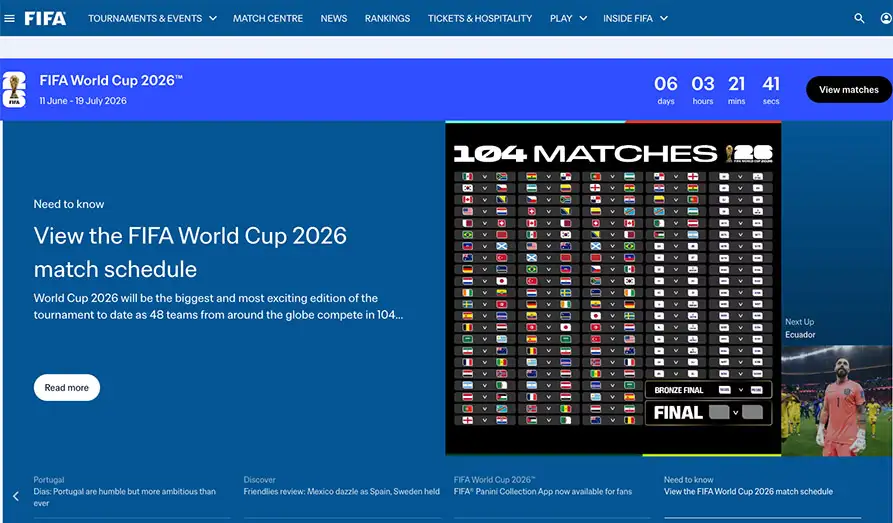
The expanded 48-team format will undoubtedly create more betting opportunities than ever before. With 104 matches, dozens of additional teams, and a completely new tournament structure, bettors will have far more markets to explore than they did during Qatar 2022.
Will a bigger World Cup create better betting opportunities? We’ll find out in June 2026—but with 40 extra matches compared to Qatar, there will certainly be more chances to prove it.
Whether that translates into better betting is the main question for those that like predict the outcome. Critics argue that adding 16 extra teams could lead to more one-sided matches and reduce the overall quality of the competition. Supporters believe the expansion will create fresh storylines, new rivalries, and more opportunities for emerging football nations to surprise the traditional powers. Critics on Reddit argue that they don’t like third placed teams going through from the groups to the round of 32.
For bettors, the truth likely lies somewhere in the middle. The biggest opportunities may come from lesser-known teams, unfamiliar player markets, and early-stage matches where bookmakers have less historical data to work with. As always, research and discipline are likely to matter far more than the tournament format itself.
One thing is certain: World Cup 2026 will be unlike any previous FIFA World Cup. Whether you’re watching as a football fan or following the action from a betting perspective, the tournament promises more matches, more nations, and more stories than ever before. According to data from World Weather Attribution, it seems to be way hotter in some cities as well such as Miami, Houston and Dallas compared to in Qatar since it was played in the Autumn last time. Some host cities are expected to experience significantly higher temperatures than those seen during Qatar 2022, which was played during the cooler autumn months. While it’s difficult to measure the impact, nations such as Saudi Arabia, Iraq, Egypt, and Panama may feel more comfortable in extreme heat than teams from Northern Europe. Heat management and squad rotation could therefore become important factors for bettors to monitor during the tournament.
Go directly to
- 1 Why FIFA Expanded the World Cup to 48 Teams
- 2 The Biggest Changes Compared to Qatar 2022
- 3 104 Matches: More Football or Too Much Football?
- 4 Will Smaller Nations Finally Get Their Chance?
- 5 What Does the Expansion Mean for Sports Bettors?
- 6 Will Bookmakers Have a Harder Time Setting Odds?
- 7 USA, Canada and Mexico: How Much Does Home Advantage Matter?
- 8 Which Teams Benefit Most From the New World Cup Format?
- 9 Will the Favorites Become Even Stronger?
- 10 Will World Cup 2026 Boost Crypto Gambling Activity?
- 11 Our Verdict
Why FIFA Expanded the World Cup to 48 Teams
The 2026 FIFA World Cup will be the first edition to feature 48 teams instead of the traditional 32. FIFA argues that the expansion gives more countries a realistic opportunity to qualify and allows football to grow in regions that have historically received fewer World Cup spots.
The larger format also reflects the sport’s global popularity. Nations from Africa, Asia, North America, and Oceania will receive additional qualification places, creating more opportunities for emerging football nations to compete on the world’s biggest stage.
Critics, however, argue that adding 16 extra teams could dilute the overall quality of the tournament. Some fans worry that more group-stage matches may lead to one-sided games and a longer competition schedule. From a betting perspective, the expanded format introduces more matches, more teams, and potentially more surprises. Bettors will have opportunities to analyze unfamiliar nations, emerging stars, and underdog stories that may not have reached previous World Cups.
Whether the new format improves the tournament remains a matter of debate. Supporters see it as a celebration of football’s global growth, while critics believe the traditional 32-team structure produced a more exclusive and competitive event.
The Biggest Changes Compared to Qatar 2022
World Cup 2026 will be the largest tournament in FIFA history. The number of participating teams increases from 32 to 48, while the total number of matches jumps from 64 to 104. Unlike Qatar 2022, which was hosted by a single country, the 2026 tournament will be shared by the United States, Canada, and Mexico.
Fans can also expect a longer tournament, more travel between venues, and a new format featuring 12 groups of four teams. The expansion creates more opportunities for emerging football nations to qualify, but it also raises questions about whether a larger tournament will improve the overall quality of the competition.
| Category | Qatar 2022 | World Cup 2026 |
|---|---|---|
| Teams | 32 | 48 |
| Matches | 64 | 104 |
| Host Countries | 1 | 3 |
| Host Cities | 8 | 16 |
| Tournament Length | 29 Days | 39 Days |
| Knockout Teams | 16 | 32 |
| Matches for Champion | 7 | 8 |
104 Matches: More Football or Too Much Football?
While many football fans will welcome the increase from 64 to 104 matches, not everyone is convinced that bigger automatically means better. Critics argue that expanding the tournament could lower the overall quality of the group stage, as some of the additional teams may struggle to compete with established football powers.
Supporters of the new format see things differently. They point out that today’s so-called smaller nations are stronger than ever, with countries such as Uzbekistan, Jordan, Curaçao, and South Africa earning their places through increasingly competitive qualification campaigns. More teams also means more opportunities for underdog stories, which have often become some of the most memorable moments in World Cup history.
From a betting perspective, the additional 40 matches create significantly more markets, player props, and opportunities to find value. While some fixtures may appear less attractive on paper, others could produce the kind of surprise results that make major tournaments so unpredictable.
Ultimately, World Cup 2026 may answer a question that football fans have debated for years: does a larger tournament dilute the competition, or does it make the World Cup more global, inclusive, and entertaining?
Some fans fear there will be more mismatches. Others believe there will be more teams that nobody expected to make headlines before the tournament began. Could teams such as Uzbekistan, Jordan, Saudi Arabia or Norway become the surprise stories of the tournament?
Will Smaller Nations Finally Get Their Chance?
One of FIFA’s main goals with the 48-team format was to give more countries an opportunity to compete on football’s biggest stage. Under the previous system, many nations regularly came close to qualification but fell short due to limited places available in their region.
The expanded format appears to have achieved that objective. Countries such as Uzbekistan and Jordan will make their World Cup debuts, while teams including Iraq, Haiti, New Zealand, South Africa, and Sweden have secured places after missing recent tournaments.
For fans, this creates fresh storylines and introduces teams that many viewers may know little about. For traditional football powers, it also means facing a wider variety of opponents than in previous World Cups.
Whether these nations can make deep runs remains to be seen, but the 2026 tournament will undoubtedly be more global than any world cup before it. More fans than usually will be watching matches since more teams are involved.
What Does the Expansion Mean for Sports Bettors?
The increase from 64 to 104 matches creates far more betting opportunities than previous world cups. Bettors will have access to additional match markets, player props, group-stage wagers, and outright betting options throughout the tournament. Something to Watch: Many bettors naturally focus on the biggest teams, but world cups have a long history of unexpected results. Fixtures involving a heavily favored nation and a lesser-known opponent can attract plenty of attention, especially in multi-match accumulators. The challenge is determining whether the underdog is genuinely outmatched or simply less familiar to the broader betting public.
The expanded field may also create situations where bookmakers have less historical world cup data available. First-time qualifiers and less familiar national teams can be more difficult to price accurately than established football powers, particularly during the early stages of the competition.
At the same time, bettors should be cautious about assuming every newcomer represents value. Modern bookmakers rely on sophisticated statistical models and global scouting data, meaning obvious pricing mistakes are often corrected quickly.
The biggest opportunities may come from identifying underrated teams, emerging players, and matchups that attract less attention from the broader betting public.
Will Bookmakers Have a Harder Time Setting Odds?
To some extent, yes. The expanded 48-team format means bookmakers will have to price matches involving more nations that rarely appear on the world stage. While major teams such as Brazil, France, Argentina, and England are extensively analyzed, there is often far less data available for smaller football nations making their world cup debut.
This can occasionally create opportunities for bettors. During previous tournaments, bookmakers have sometimes underestimated emerging teams or overvalued traditional football powers based on reputation alone. The larger field increases the likelihood of such situations occurring again in 2026.
For example, if a nation such as Uzbekistan, Jordan, or another first-time qualifier reaches the tournament, bookmakers may initially rely heavily on qualification results, FIFA rankings, and limited international data. That can make early group-stage matches particularly interesting for bettors willing to do deeper research.
However, modern bookmakers are also supported by advanced analytics, AI-driven models, and vast amounts of player and team data. Any obvious pricing mistakes tend to be corrected quickly once the tournament begins. From a handful of different bookmakers that support crypto deposits, I’ve noticed that the odds are identical on many different outright odds such as the winner of the FIFA world cup 2026. Perhaps it will change more towards the final days, or with live odds, but right now it feels like it doesn’t matter too much which site you go for. The odds are more or less identical anyway.
The biggest betting opportunities may not come from predicting the World Cup winner, but from identifying underrated teams, player markets, and group-stage matches involving nations that bookmakers and casual bettors know less about.
USA, Canada and Mexico: How Much Does Home Advantage Matter?
Hosting the FIFA World Cup can provide a meaningful boost. Home teams avoid long travel schedules, enjoy familiar conditions, and benefit from strong crowd support. Historically, host nations often perform better than expected, with some reaching the latter stages despite not being among the tournament favorites.
However, bettors should keep expectations realistic for the three 2026 hosts. None of them are considered serious title contenders alongside powerhouses such as Argentina, France, Brazil, Spain or Englands national football teams. The odds for Spain winning is 5.5x, France 6x and England 7x on both Betplay and BC Game.
United States
The United States has never won a FIFA World Cup. Their best result remains a semi-final appearance in 1930, while a quarter-final run would generally be considered a strong tournament today. Playing at home could help the Americans advance deeper than expected, but winning the trophy would still be viewed as a major surprise. Since way fewer International supporters plan to visit the U.S than expected, this might actually be positive for United States since more local audience could help the team. The outright odds for United States winning is 65:1 on multiple different crypto friendly betting sites that we checked.
Mexico
Mexico has hosted the World Cup twice before (1970 and 1986) and will become the first country to host three men’s World Cups. Despite its passionate football culture, Mexico has never won the tournament and has never reached a World Cup final. Historically, reaching the quarter-finals would already be considered a major achievement. The odds for Mexico taking home the trophy is 80:1 on a few different sportsbetting sites that accept crypto.
Canada
Canada is making its debut as a men’s World Cup host nation. While the Canadian squad has improved significantly in recent years and features several players competing in top European leagues, it remains an outsider compared to the tournament favorites. Simply reaching the knockout stage would likely be viewed as a successful campaign. If you think Canada could win, the odds is rather generous with 150:1 for a win on more than 3 different sites that we checked.
What Does This Mean for Bettors?
Home advantage may help all three hosts pick up valuable points during the group stage and potentially reach the knockout rounds. That can create interesting betting opportunities in match markets, group betting, and player props.
But when it comes to outright winner markets, bettors should remember that none of the three host nations have ever won the FIFA World Cup, and all remain well behind the leading contenders in terms of squad depth, recent results, and overall tournament pedigree. Home support can help, but it rarely turns an outsider into a world champion.
Conclusion: Home advantage could help the especially USA since they likely will have lots of Americans in the audience and they ended up in a fairly easy group, while Mexico and Canada could outperform expectations in individual matches. However, a World Cup victory for any of the three hosts would still rank among the biggest surprises in modern tournament history.
Which Teams Benefit Most From the New World Cup Format?
The biggest winners from FIFA’s expansion are not necessarily the traditional football giants. Countries such as Brazil, Argentina, France, England, and Spain were already expected to qualify comfortably under the previous 32-team format.
Instead, the additional 16 spots primarily benefit nations that regularly came close to qualifying but often fell short due to limited places in their respective regions.
Biggest winners of the 48-team format: The expanded format appears to have achieved one of FIFA’s main goals: bringing new nations to the World Cup. Uzbekistan and Jordan will make their tournament debuts, while countries such as Iraq, New Zealand, South Africa, and Sweden return after missing recent editions or spending years outside football’s biggest stage. Not every beneficiary made it, however. Nigeria was widely viewed as a nation that could benefit from the additional qualification places but ultimately failed to reach the tournament. The same is true for Jamaica that many thought could qualify, but instead Curaçao went through for the first time.
Will the Favorites Become Even Stronger?
Based on current betting odds, Spain, France and Argentina appear to be the strongest contenders heading into World Cup 2026. My view is that Brazil and Germany could outperform expectations, while England and Portugal look more like potential semi-finalists than likely champions.
The expanded format may actually favor elite nations. Greater squad depth, tournament experience, and the ability to rotate players become increasingly important in a competition featuring 104 matches and an additional knockout round.
At the same time, a longer tournament creates more opportunities for injuries, suspensions, fatigue, and unexpected upsets. While the favorites remain difficult to overlook, world cup history has repeatedly shown that even the strongest teams are never guaranteed success.
Will World Cup 2026 Boost Crypto Gambling Activity?
Held only once every four years, the FIFA World Cup is one of the few sporting events capable of attracting casual bettors, football fans, and professional gamblers at the same time. The expanded 2026 tournament could therefore become one of the largest betting events in crypto gambling history.
With a record 104 matches spread across more than a month, sportsbooks are likely to experience some of their busiest weeks of the year. Crypto betting sites could also benefit from the increased interest. Many football fans already use cryptocurrencies such as Bitcoin, Ethereum, and USDT for faster deposits, international transfers, and quicker withdrawals compared to some traditional payment methods. Cryptocurrency prices may also influence betting activity. During periods of high volatility, some bettors prefer to hold their assets rather than spend them on wagering. Readers interested in betting on World Cup 2026 can compare a range of sportsbooks that support Bitcoin, Ethereum, USDT, and other popular cryptocurrencies.
Our Verdict
Will smaller nations finally get their chance? It remains to be seen. Bookmakers will have more matches and unfamiliar teams to evaluate, but modern analytics and data models mean obvious pricing errors are likely to be rare.