



Decentralized casinos sound simple: connect a crypto wallet, play on-chain games, and rely less on a traditional casino account. In reality, the category is more complicated and the reality is not always identical to the marketing.
Some sites are genuinely blockchain-based. Others are normal crypto casinos using the word “decentralized” because it sounds modern. That difference matters for players, because it affects transparency, withdrawals, game variety, support, privacy, and dispute handling.
At Crypto Lists, we try to separate true decentralized gambling platforms from regular Bitcoin casinos that simply accept crypto. The toplist below focuses on casinos and betting sites that are closer to the decentralized or wallet-based model, while the guide underneath explains what players should check before using them.
18 Best Decentralized Casinos in June 2026

Initially tested from Sweden in November 2024 with both ETH and LTC deposits. Tested the withdrawal in May 2026 since I had balance left on this account. Supports the common crypto deposit methods and handle very quick withdrawals between 8 AM and 9 PM UTC, when the support is open. You need to wager 3x before you can cash out, due to money laundering rules they claim.

Re-tested from Sweden in September 2024. Supports BTC, ETH and USDT deposits.

Tested from Sweden in September 2025. Supports BTC, ETH and USDT deposits. No KYC required at signup.

Tested from Sweden in December 2025. Supports BTC, ETH and USDT deposits. No KYC required at signup.

Tested from Sweden in September 2024. Supports BTC, ETH and USDT deposits.

Latest test from Sweden in March 2025. Supports BTC, ETH and LTC deposits.

Tested from Sweden in May 2025. Supports ETH and BNB deposits. No KYC required at signup.

Tested from Sweden in September 2024. Supports BTC, ETH and USDT deposits.

Latest test from Sweden in February 2025. Supports BTC, USDT and USDC deposits. No KYC required at signup.

Tested from Sweden in June 2025. Supports BTC, ETH and USDT deposits. No KYC required at signup.

Tested from Sweden in June 2025. Supports BTC, ETH and USDT deposits.

Follow-up test from Sweden in June 2025. Supports BTC, ETH and USDT deposits.

Another test from Sweden in June 2025. Supports BTC, ETH and USDT deposits.

Latest test from Sweden in February 2025. Supports BTC, ETH and SOL deposits.

Re-tested from Sweden, December 2025. Supports BTC, ETH and USDT deposits.

Tested from Sweden in December 2025. Supports USDT deposits.

Another test from Sweden in February 2025. Supports BTC, ETH and USDT deposits.

Tested from Sweden in December 2025. Supports BTC, ETH and USDT deposits. No KYC required at signup.
Go directly to
- 1 18 Best Decentralized Casinos in June 2026
- 2 What is a decentralized casino?
- 3 How do they work?
- 4 Advantages of Decentralized Casinos
- 5 Disadvantages of Decentralized Casinos
- 6 How do centralized and decentralized casinos compare?
- 7 Is it easy to register?
- 8 How do I deposit?
- 9 How do I set up a crypto wallet?
- 10 How do I withdraw?
- 11 Common queries about decentralized vs centralized casinos
- 11.1 Why do some players prefer centralized casinos?
- 11.2 Are there any disadvantages to playing at a centralized casino?
- 11.3 Can I play at a centralized casino using cryptocurrency?
- 11.4 Are decentralized casinos fairer than other casinos?
- 11.5 In which way are decentralized casinos better than others?
- 11.6 Can you bet on sports on decentralized casinos?
- 11.7 What are the biggest challenges for decentralized casinos?
- 11.8 Which are the most popular games for decentralized casino sites?
- 11.9 Are transaction speeds and costs better on decentralized casino platforms?
- 12 Looking for the best decentralized casinos?
- 13 FAQ for Decentralized Casinos
What is a decentralized casino?
A decentralized casino is a gambling platform where parts of the casino experience are handled through blockchain technology instead of relying only on a traditional central casino account.
In the strictest sense, a decentralized casino uses smart contracts, wallet connections, on-chain transactions, and provably fair systems to reduce the need for a central operator. Ethereum.org describes smart contracts as programs that run on the Ethereum blockchain and execute according to code-based rules. You can read the official explanation here: Ethereum smart contracts.
However, not every casino that accepts cryptocurrency is decentralized. A normal crypto casino may accept Bitcoin, Litecoin, Ethereum or USDT while still controlling balances, game access, support, withdrawals and account rules through a centralised platform.
After reviewing crypto casinos for years, we’ve found that many brands marketed as decentralized are only partially decentralized. In practice, most still rely on a central company, central game servers, central support teams, and traditional licensing structures.
From an affiliate and industry perspective, decentralized casinos remain a small niche. Many operators struggle to attract the same player volumes as established crypto casinos, and several projects launched with significant hype have failed to gain long-term traction.
Are Decentralized Casinos Really Better?
Not necessarily.
After reviewing hundreds of crypto casinos, we’ve found that most players still prefer traditional crypto casinos. They typically offer larger game libraries, stronger customer support, more reliable payment processing, and better overall user experiences.
Many casinos marketed as “decentralized” are also not fully decentralized in practice. They may use blockchain technology for deposits or certain games, while still relying on a central company to manage accounts, promotions, support, and platform operations.
True decentralized gambling remains a niche within the wider crypto casino industry. While the technology is interesting, adoption has been slower than many expected a few years ago.
How do they work?
Most decentralized casinos start with a wallet connection instead of a standard email-and-password account.
A player connects a wallet such as MetaMask, Phantom, Trust Wallet or another supported wallet. The casino then uses that wallet to identify the player, process deposits, sign transactions, or interact with smart contracts.
In a more decentralized setup, game logic, wagers or payouts may be partly handled on-chain. In a less decentralized setup, the wallet is mainly used for deposits and withdrawals while the rest of the casino still operates more like a normal crypto casino.
The key question is not whether the site uses blockchain language. The key question is what is actually decentralized.
Game outcomes: Are results handled or verifiable on-chain, or only inside the casino’s own system?
Funds: Does the casino custody player balances, or are wagers handled directly from a wallet?
Transparency: Can players verify transactions or results through a blockchain explorer?
Control: Can the operator freeze access, delay withdrawals, change terms, or manually review accounts?
If most important decisions still depend on the operator, the casino may be crypto-based but not fully decentralized.
Advantages of Decentralized Casinos

Decentralized casinos can offer several advantages when the technology is implemented properly.
Greater transparency: Blockchain transactions can often be checked publicly, which makes deposits and withdrawals easier to verify.
Wallet-based access: Some platforms allow players to connect a wallet instead of creating a traditional casino account.
Provably fair games: Many decentralized or crypto-native games allow players to verify results using cryptographic methods.
Faster crypto payments: Some wallet-based casinos process withdrawals quickly, especially on fast networks or Layer 2 solutions.
Less dependence on banks: Players who already use cryptocurrency may prefer direct wallet payments over card payments, bank transfers or e-wallets.
The strongest decentralized casinos are not necessarily the ones with the loudest marketing. They are the ones where players can clearly understand how funds, results and withdrawals are handled.
Disadvantages of Decentralized Casinos

Decentralized casinos also come with real drawbacks.
Game variety is often smaller than at major centralized crypto casinos. Many traditional software providers do not support fully decentralized gambling platforms, so players may see more dice, crash, plinko and instant games than large slot libraries or premium live casino lobbies.
Support can also be weaker. Some decentralized platforms rely heavily on community channels, Discord, Telegram, documentation or automated systems rather than traditional live chat support.
There may also be less formal player protection. If a platform is unlicensed or lightly regulated, complaints can be harder to escalate. A transparent smart contract is useful, but it does not automatically replace customer support, responsible gambling tools or dispute resolution.
The biggest risk is false decentralization. Some sites use decentralized language while still keeping most control centrally. That can mislead players who believe they are using a trustless platform when they are really using a normal crypto casino with Web3 branding.
How do centralized and decentralized casinos compare?
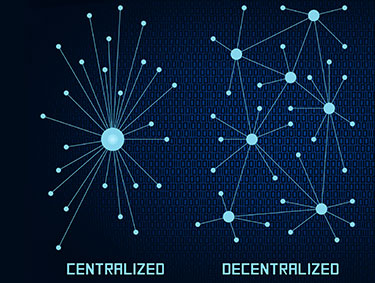
Centralized casinos and decentralized casinos can both accept cryptocurrency, but they are built differently.
| Feature | Centralized Crypto Casino | Decentralized Casino |
|---|---|---|
| Account setup | Usually email, username or full account registration | Often wallet-based access |
| Game library | Usually larger, with more slots and live casino providers | Often smaller, with more crypto-native games |
| Payments | Crypto deposits and withdrawals handled by the casino | May use direct wallet transactions or smart contracts |
| Transparency | Depends on operator, providers and payment records | Some activity may be verifiable on-chain |
| Support | Usually live chat or email support | May rely more on community or wallet-based systems |
| Player protection | Depends on licence and operator standards | Often weaker formal dispute resolution |
Neither model is automatically better. Centralized casinos often provide more games, stronger support and clearer casino-style features. Decentralized casinos may provide more transparency, faster wallet interaction and a more crypto-native experience.
Is it easy to register?
Registration can be very simple if the platform supports wallet connection.
Instead of entering name, address, phone number and email, a player may only need to connect a wallet and approve a transaction or signature. This can make the experience faster than signing up at a normal casino.
However, wallet-based access also places more responsibility on the player. If you connect the wrong wallet, approve a suspicious transaction or lose access to your recovery phrase, there may be no central account recovery team that can fix the problem.
MetaMask explains that a Secret Recovery Phrase controls access to wallet accounts and should never be shared. Their official safety guidance is worth reading before using any wallet-based casino: MetaMask wallet security.
How do I deposit?
Depositing at a decentralized casino usually starts by connecting a supported wallet.
Once connected, you may be asked to send funds to a wallet address, approve a transaction, or interact with a smart contract. The exact process depends on the casino and blockchain network.
Players should be careful with network selection. Sending the wrong coin to the wrong address can permanently destroy the funds. For example, sending Bitcoin to an Ethereum address is not the same as sending ETH or an ERC-20 token.
Fees and confirmation times also vary. Ethereum may be more expensive during busy periods. Solana, Polygon, Arbitrum, Tron and other networks may be faster or cheaper depending on the casino’s setup.
Before depositing, check whether the casino clearly explains supported networks, minimum deposits, withdrawal rules and what happens if a transaction is sent incorrectly.
How do I set up a crypto wallet?
Setting up a wallet is usually straightforward, but it should not be rushed.
Start by downloading the wallet only from the official website or official app store listing. Fake wallet apps and phishing websites are common in crypto.
After installation, the wallet will usually generate a recovery phrase. Write it down offline and store it safely. Do not send it to anyone, do not paste it into random websites and do not enter it into a casino support chat.
Once the wallet is ready, you can receive cryptocurrency, send funds, connect to supported websites and approve transactions. Before using the wallet at a casino, test it with a small amount first so you understand the process.
How do I withdraw?
Withdrawals depend on how the casino handles player balances.
At some platforms, withdrawals are similar to a normal crypto casino. You enter a wallet address, choose a coin and wait for the casino to process the request.
At more decentralized platforms, payouts may be handled automatically through a smart contract or wallet interaction. This can be faster, but it also means players must understand exactly what they are approving.
Always check the receiving address, network and withdrawal amount before confirming. Blockchain transactions are usually irreversible once broadcast.
After withdrawal, players can often track the transaction through a blockchain explorer such as Etherscan, Solscan, Tronscan or Blockchain.com depending on the network used.
Common queries about decentralized vs centralized casinos
Decentralized gambling raises a lot of practical questions. The answers below focus on what matters most for players: fairness, withdrawals, support, security and game choice.
Why do some players prefer centralized casinos?
Many players prefer centralized crypto casinos because they feel more familiar.
They usually offer larger game libraries, more live casino content, more software providers, easier customer support, clearer bonus systems and traditional account management.
For casual players, that convenience can matter more than wallet-based access or on-chain transparency.
Are there any disadvantages to playing at a centralized casino?
The main disadvantage is that players depend more heavily on the operator.
The casino controls account balances, withdrawal processing, support decisions and terms enforcement. If the operator is slow, unclear or unfair, the player has fewer technical ways to verify what is happening.
This is why Crypto Lists increasingly focuses on real deposit and withdrawal testing, support checks and KYC wording when reviewing centralized crypto casinos.
Can I play at a centralized casino using cryptocurrency?
Yes. Many centralized casinos accept cryptocurrency.
In fact, most Bitcoin casinos reviewed on Crypto Lists are centralized casinos that support crypto payments rather than fully decentralized platforms.
That is not necessarily bad. A centralized crypto casino can still be excellent if it offers reliable withdrawals, fair terms, strong games and responsive support.
Are decentralized casinos fairer than other casinos?
They can be more transparent, but they are not automatically fairer.
Provably fair systems and smart contracts can help players verify some outcomes. However, fairness also depends on game design, contract quality, audits, random number generation, payout rules and whether players can actually understand what is being verified.
A poorly designed smart contract can still create problems. A transparent system is only useful when the underlying rules are sound.
In which way are decentralized casinos better than others?
Decentralized casinos can be better for players who value wallet-based access, blockchain transparency, crypto-native games and reduced reliance on traditional account systems.
They may be worse for players who want large slot libraries, live dealer games, familiar customer support, formal licensing and easy account recovery.
The best choice depends on what you value most.
Can you bet on sports on decentralized casinos?
Some decentralized betting platforms offer sports markets, but the selection is usually more limited than at major centralized sportsbooks.
Sports betting is harder to decentralize than simple casino games because it requires odds feeds, event settlement, market management and reliable data sources.
Players should check how markets are settled, whether odds are competitive and what happens if an event is disputed or postponed.
What are the biggest challenges for decentralized casinos?
The biggest challenges are game variety, user experience, smart contract risk, wallet security, limited support and weaker formal dispute resolution.
Many players like the idea of decentralization but still prefer the convenience of a polished centralized casino. That is why decentralized gambling remains a specialist category rather than the default choice for most players.
Which are the most popular games for decentralized casino sites?
Decentralized casinos often focus on simple, crypto-native games.
Dice, plinko, crash, mines, roulette-style games, prediction games and instant-win titles are common because they are easier to build around provably fair logic or smart contracts.
Large slot libraries, jackpot games and premium live casino tables are usually more common at centralized crypto casinos.
Are transaction speeds and costs better on decentralized casino platforms?
They can be, but it depends on the network.
Fast networks and Layer 2 systems can make deposits and withdrawals quick and inexpensive. Ethereum mainnet can become expensive during busy periods. Bitcoin can be slower unless Lightning Network is supported.
Players should compare the coin, network and casino processing policy before assuming a withdrawal will be instant.
Looking for the best decentralized casinos?
The toplist above is designed to help players find crypto casinos and betting sites that are closer to the decentralized or wallet-based model.
Before choosing one, check the review carefully. The most important questions are whether the casino is genuinely decentralized, how funds are handled, whether outcomes can be verified, which wallets are supported, and what support is available if something goes wrong.
What is the best decentralized casino?
There is no single best decentralized casino for everyone.
Some players want the most transparent on-chain experience. Others want fast crypto withdrawals, anonymous play, low fees or a larger game library. These preferences can lead to very different choices.
Use the toplist as a starting point, then read the individual review before depositing.
FAQ for Decentralized Casinos
Are decentralized casinos more secure and anonymous?
They may offer more privacy and transparency than traditional casinos, but this depends on the platform.
Wallet-based access can reduce the amount of personal information required. At the same time, blockchain transactions are public, and wallet security becomes the player’s responsibility.
Decentralised or decentralized crypto casinos?
Both spellings are correct.
“Decentralised” is common in British English, while “decentralized” is more common in American English and international crypto content. Crypto Lists generally uses “decentralized” because it is the more common search term globally.
Are funds safe in a decentralized casino?
Funds are only as safe as the platform, smart contracts and wallet practices behind them.
A strong decentralized casino should explain how funds are held, how transactions are processed and whether contracts have been audited. Players should also protect their own wallet carefully and never share recovery phrases.
Do decentralized casinos have loyalty and rewards programs?
Some do, but they are usually different from traditional casino loyalty programs.
Instead of standard VIP levels, decentralized platforms may use tokens, community rewards, rakeback, leaderboards or wallet-based incentives.
How do I choose the best decentralized casino for me?
Start by deciding what matters most: transparency, wallet access, game variety, anonymity, fast withdrawals, sports betting or support quality.
Then compare reviews, test with a small deposit first and avoid platforms that make unclear claims about decentralization, guaranteed fairness or risk-free play.


 Roll Space is a completely decentralized PvP site to try!
 100% anonymity and decentralized betting on Dex Sport!
 Decentralized gambling and token mining on Star Bets
 Bask in decentralized anonymity on Cyber Coins no-KYC site!