
·📅 5 Apr 2022·🔄 Updated: 12 Jun 2026
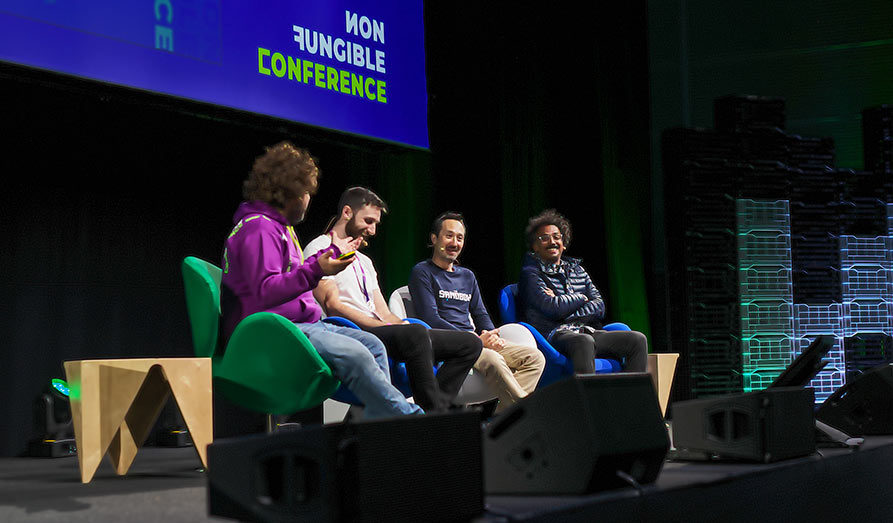
Crypto Lists attended the first day of Non Fungible Conference in Lisbon in April 2022. At the time, NFTs, metaverse fashion, play-to-earn games and digital art collections were surrounded by huge optimism. Looking back from 2026, the event feels like a snapshot from the peak NFT era: full of creativity, bold predictions, real artistic energy and, yes, plenty of market hype that did not age well.
This updated article is not a fresh “NFTs are going to the moon” piece. It is a first-hand look back at what we saw on the ground at Pavilhão Carlos Lopes in Lisbon, what speakers and projects were talking about, and what actually happened to the NFT sector after the 2021–2022 boom cooled down.
The conference took place at Pavilhão Carlos Lopes, close to Parque Eduardo VII and Avenida da Liberdade. Compared with many crypto events held around Parque das Nações, this location felt much more central and easier to reach. The atmosphere was lively, international and unusually relaxed for the period, with no indoor mask requirement at the event.
Crypto Lists note: We were physically present at the event, took photos, listened to sessions and spoke with projects. That first-hand angle is the reason this article is worth keeping today. Many 2022 NFT posts now read like old press releases. This one works better as a “what we saw, what changed, and what we learned” review.
Go directly to
- 1 Introductions on the 1st day
- 2 What does gamers love or hate?
- 3 How does NFT’s increase in value over time?
- 4 What can you wear in the Metaverse?
- 5 Mariupol art featured at NFC 2022
- 6 Main topics on Tuesday, 5th of April, 2022
- 7 New NFT projects That I found interesting
- 8 What we learned from NFC Lisbon four years later
- 9 Crypto Lists verdict
- 10 FAQ
Introductions on the 1st day
The opening sessions captured the mood of the NFT market in 2022. Speakers included Gauthier Zuppinger from NonFungible, Sebastien Borget from The Sandbox, and Samot C from Samot Club.
Sebastien Borget, co-founder and COO of The Sandbox, spoke about how quickly brand awareness had grown. Only a year earlier, relatively few people in the room would have recognised The Sandbox. By the time of the conference, most attendees knew the name, and many had either tried it or at least followed the metaverse narrative.
Samot Club brought a different angle, focusing more on artists and Latin America. The message was that NFTs could give artists more recognition, better distribution and a direct route to collectors. That idea still matters in 2026, even if the speculative NFT market has cooled dramatically.
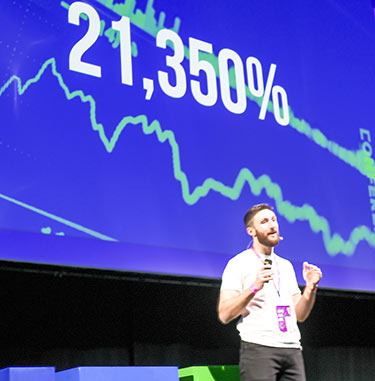
Gauthier Zuppinger also discussed the explosive NFT market growth that had taken place before the event. In 2022, the numbers were almost unbelievable. But with hindsight, this was also a warning sign. Markets that rise too quickly often attract buyers who are more interested in fast returns than long-term utility, art or community.
What does gamers love or hate?
One of the more interesting parts of the first day was the discussion around blockchain gaming. Traditional games had long followed a familiar model: buy the game, play the game, and perhaps pay for expansions or cosmetic upgrades. Play-to-earn changed that conversation by adding tokens, NFTs, in-game economies and sometimes real financial incentives.
At the conference, Romain Delnaud discussed how gamers reacted to different Web3 gaming brands. Some projects, including Alien Worlds, Neon District, Axie Infinity and Sorare, were described as polarising among gamers. Others, such as DeFi Kingdoms, Crypto Raiders and Decentraland, appeared to have a more neutral reception. Games mentioned more positively included Cometh, Game of Blocks, Thetan Arena, SkyWeaver and Gods Unchained.
Looking back, this was one of the most important discussions of the event. The gaming community did not reject every blockchain idea, but many gamers disliked anything that felt like financialisation first and gameplay second.
Crypto Lists view: The projects that survived best were not necessarily the ones with the loudest tokenomics. The stronger idea was ownership that improves gameplay, identity or collectability. When the earning angle became the main reason to play, the model often struggled once token prices fell.
How does NFT’s increase in value over time?
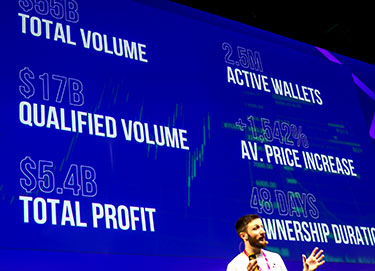
In 2022, NFT price growth was a central part of the conversation. There were claims about huge average returns, short holding periods and rapid wallet growth. At the time, it was easy to understand the excitement. Some collections had gone from unknown to extremely valuable in months.
From a 2026 perspective, that section needs a reality check. NFTs did not disappear, but the market became much more selective. Many collections lost most of their value. Some communities survived. A smaller number of projects developed into brands, games, art communities or membership products. But the broad idea that almost any NFT could be bought and quickly flipped for a huge gain clearly did not last.
| Theme at NFC Lisbon 2022 | What happened by 2026 |
| NFT art speculation | The market cooled sharply, but serious digital art and curated collections continued. |
| Play-to-earn gaming | Many token-first models struggled when rewards fell and player growth slowed. |
| Metaverse fashion | Still exists, but remains niche and tied mainly to gaming, avatars and brand experiments. |
| Digital ownership | The idea survived, especially in collectibles, gaming assets, memberships and tokenized culture. |
| NFT investment masterclasses | The tone changed from quick returns to risk, liquidity, community quality and long-term utility. |
The best way to think about NFTs today is not as a guaranteed investment category. It is better to ask what the token actually represents. Is it art? Access? A game item? A membership? A speculative image? The answer matters more than the format.
What can you wear in the Metaverse?
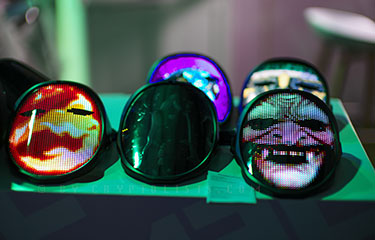
One of the more visual parts of NFC Lisbon was the metaverse fashion corner. For visitors who had not spent much time in virtual worlds such as Decentraland, The Sandbox, Axie Infinity or Enjin-connected environments, the idea of digital wearables still felt unusual.
At the event, wearables ranged from avatar accessories to strange headgear, gold-style helmets and items that made more sense in a virtual identity system than in a normal wardrobe. Some visitors treated it as fun. Others treated it as the beginning of a serious digital fashion economy.
By 2026, metaverse wearables are still around, but the market is more realistic. The strongest use cases are not random virtual clothing drops. They are items connected to games, identity, brand communities, events or platforms where people actually spend time.
Mariupol art featured at NFC 2022
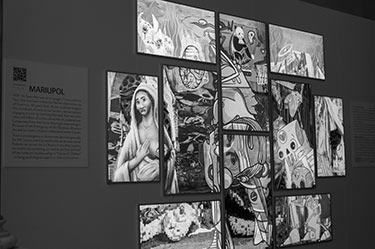
One of the most memorable rooms at the event was dedicated to the war in Ukraine and the destruction of Mariupol. This stood apart from the louder investment and metaverse conversations elsewhere at the conference.
The exhibition was a reminder that NFTs were not only being used for speculation. They were also being explored for fundraising, memory, documentation, protest art and cultural preservation. Not every experiment worked, but the intention felt more serious than many of the floor-price conversations happening in other parts of the market.
This is one of the parts of the 2022 NFT movement that deserves more respect. The market may have been overheated, but some artists and communities were using the technology to document events, raise attention and experiment with new forms of digital ownership.
Main topics on Tuesday, 5th of April, 2022
The second day had several sessions that reflected the big questions of the time: curated crypto art platforms, fine art photography in the metaverse, profile picture culture, NFT security, diversified Web3 investment strategies, NFT investing and what traditional art players misunderstood about NFTs.
The fine art photography topic was especially interesting from a Crypto Lists perspective. Photography already had a long digital transition behind it, but NFTs introduced a new question: could photographers create scarcity, ownership and provenance in a market where images are easily copied?
The NFT security topic also aged well. In 2022, many users focused on minting and flipping. By 2026, security has become one of the most important parts of NFT ownership. Wallet drainers, fake mint pages, malicious approvals and social engineering attacks have hurt many collectors.
Crypto Lists observation: The topics that aged best were security, provenance, artist access and digital ownership. The topics that aged worst were short-term return expectations and the assumption that every profile picture collection would keep rising.
New NFT projects That I found interesting
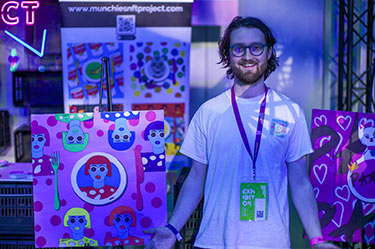
There were many new NFT projects at NFC Lisbon, and the original version of this article highlighted MunchiesNFT as one of the more interesting discoveries of the day. The reason was not only the collection itself, but the art background of co-founder Adam Rattigan and the attempt to connect NFT culture with references to well-known artists.
Looking back, this section needs a more careful tone. In 2022, it was common for NFT writers to discuss floor prices, rarity, traits and potential upside. In 2026, that kind of language can look too promotional unless it is clearly framed as a historical observation rather than investment advice.
MunchiesNFT was interesting because it tried to make art history part of the game. The collection referenced artists such as Banksy, Van Gogh, Picasso, Andy Warhol, Antoni Gaudi, Frida Kahlo, Gustav Klimt, Hilma af Klint, Leonardo da Vinci, Salvador Dali and Wassily Kandinsky. That made it more educational than many simple profile picture projects.
Other projects that stood out included LaCollection, Aika, Crypto Graffers and a Genesis Drop concept described as “When sculpture meets Dance”. Some had connections to museums or staking ideas. Others leaned more toward digital performance, art access or collectibles.
Crypto Lists 2026 view: We would no longer describe any new NFT project from a conference as “hot” based on floor price or trait count alone. The better questions are: who is behind it, does the art stand on its own, is there a real collector base, is the smart contract safe, and does the project still matter after the event hype fades?
What we learned from NFC Lisbon four years later
NFC Lisbon 2022 captured both sides of the NFT boom. On one side, there was real creativity, serious artistic experimentation, global community-building and important discussions about digital ownership. On the other side, there was too much easy-money language, too much focus on rarity mechanics and too many assumptions that early growth would continue forever.
That does not make the event a failure. It makes it historically useful. It showed what the NFT market believed about itself at the time, before the bear market forced everyone to become more selective.
For Crypto Lists, the lasting lesson is that NFT value should never be judged only by a floor price. The stronger projects need cultural relevance, artist credibility, platform utility, security, liquidity and a reason for people to care after the first wave of buyers leaves.
Crypto Lists verdict
This article is worth keeping because Crypto Lists was there in person. We saw the sessions, the wearables, the art rooms, the project pitches and the mood of the market during one of the most optimistic moments in NFT history.
But the article also needed a full 2026 update. The old version was too focused on growth, quick returns and project picks. The better version is a more honest reflection: NFTs were overhyped in 2022, but not meaningless. Some ideas faded. Some matured. Some artists and builders kept going after the speculative crowd moved on.
If you are researching NFTs today, the main takeaway from NFC Lisbon 2022 is simple: excitement can start a market, but only usefulness, culture, security and community can keep it alive.
FAQ
What was Non Fungible Conference Lisbon 2022?
Non Fungible Conference Lisbon 2022 was an NFT-focused event held at Pavilhão Carlos Lopes in Lisbon, covering digital art, metaverse fashion, play-to-earn gaming, Web3 investing and NFT culture.
Did Crypto Lists attend the event?
Yes. Crypto Lists attended the first day of the conference in person and reported on the atmosphere, speakers, photos, NFT projects and sessions.
Did the NFT market keep growing after 2022?
No. The NFT market cooled significantly after the 2021–2022 boom. Some serious art, gaming and membership use cases continued, but many speculative collections lost value.
What NFT topics aged best from the conference?
The strongest long-term topics were NFT security, artist access, digital ownership, provenance, gaming assets and cultural preservation.
Are NFTs still worth watching in 2026?
Yes, but with a more selective mindset. Serious collectors should focus on artist credibility, utility, community, security and long-term relevance rather than short-term floor price hype.