


Crypto Lists originally interviewed Ivan Ilin, COO of NearPay, during the NEARCON period in Lisbon, when the NEAR ecosystem was pushing hard into consumer wallets, fiat on-ramps and crypto payment cards. This updated version keeps the original interview, but adds 2026 context because both NEAR and NearPay have changed significantly since then.
At the time of the interview, NearPay was presented as a bridge between fiat and crypto: a wallet, card and payment widget connected to the NEAR ecosystem. That was an interesting idea in 2022, especially when many crypto users still struggled to move between bank money and blockchain assets without using large centralized exchanges.
In 2026, the story is more nuanced. NEAR is no longer only discussed as a fast layer-1 blockchain. It has become one of the more visible crypto projects in the AI, chain abstraction and cross-chain transaction conversation. NEAR’s own documentation describes chain signatures as a way for NEAR accounts to sign and execute transactions across multiple blockchains, which is part of why the project is often mentioned when people talk about sending, transferring or controlling assets across different networks from one account.
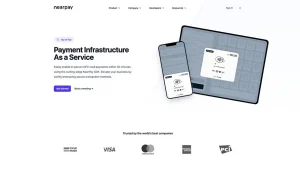
NearPay also appears to have moved on from the original NEAR crypto wallet and card positioning. The current site at NearPay.io presents NearPay as payment infrastructure and Tap to Pay technology for merchants, rather than mainly as a consumer crypto wallet connected to NEAR. That does not make the old interview useless, but it does mean readers should treat it as a historical interview rather than a current product review.
Go directly to
- 1 2026 Editor’s Note: Is NearPay Still Relevant?
- 2 Why This Interview Still Matters
- 3 Key Takeaways From The NearPay Interview
- 4 Interview with Ivan Ilin, COO of NearPay
- 4.1 Can NearPay be used even if you don’t have a NEAR wallet?
- 4.2 How long has NearPay been around?
- 4.3 What was most complicated with the creation of NearPay?
- 4.4 Any deposit methods that you are keen to implement on NearPay?
- 4.5 Do you think UnionPay or Maestro will be accepted with NearPay soon?
- 4.6 How does NearPay differentiate from Sender Wallet?
- 4.7 Which are the 3 most bought cryptocurrencies with NearPay?
- 4.8 Why should I get a NearPay Visa card?
- 4.9 Are there different reward levels? Lounge access or anything like that?
- 4.10 How fast can I buy or sell the NEAR coin with NearPay?
- 4.11 How many users did NearPay have and what was the estimate for 2024?
- 4.12 From the merchant’s point of view, why should they consider NearPay?
- 4.13 Do you accept all industries as a NearPay merchant?
- 4.14 Are there any well-known NearPay white-label brands yet?
- 5 How NEAR Changed Since This Interview
- 6 Should This Article Stay on Crypto Lists?
- 7 FAQ About NearPay, NEAR and This Interview
2026 Editor’s Note: Is NearPay Still Relevant?
Short answer: NearPay is still relevant as a payments name, but not necessarily in the same way this 2022 interview described it.
The original interview focused on crypto cards, NEAR wallets, fiat on-ramps, supported coins and the idea of using crypto for everyday payments. The current NearPay website focuses more on payment infrastructure, SDKs, NFC payments, Tap to Pay and merchant acceptance. That is a meaningful shift.
For that reason, Crypto Lists does not present this article as a fresh NearPay review. We are keeping it as an interview archive because it captures a useful moment in NEAR’s history: the period when many crypto companies were trying to make blockchain feel as easy as online banking.
What readers should verify today: If you are considering NearPay now, check the current product, country availability, fees, supported payment rails, legal entity, compliance status and whether the service you are viewing is the same NearPay discussed in older NEAR ecosystem material.
Why This Interview Still Matters
Some old crypto interviews age badly because they are just marketing. This one is more useful because it shows the practical problems crypto payment companies were trying to solve: fiat deposits, cards, wallet recovery, merchant risk, supported countries and compliance boundaries.
It also shows something important about adoption. Most people do not care how elegant a blockchain is if they cannot easily buy, store, spend or recover access to their funds. That problem has not gone away in 2026.
What has changed is the role of NEAR itself. Today, NEAR is increasingly positioned around AI, user-owned data, chain abstraction and cross-chain execution. NEAR’s official AI pages describe the project’s focus on user-owned, verifiable AI, while its chain abstraction documentation explains how NEAR accounts can interact across many blockchain protocols.
Key Takeaways From The NearPay Interview
| Topic | What the interview showed | 2026 context |
| Wallet access | NearPay aimed to make crypto easier by creating a custodial wallet experience for users. | Custodial wallets remain easier for beginners, but users must understand counterparty and recovery risks. |
| Fiat bridges | The company focused on cards, bank transfers and fiat-to-crypto access. | On-ramps are still one of the most important parts of mainstream crypto adoption. |
| Merchant risk | NearPay avoided gambling, betting and cannabis because of risk and banking relationships. | This remains realistic. Payment companies still face heavy compliance pressure around high-risk industries. |
| NEAR ecosystem | The interview was tied to NEARCON and NEAR ecosystem growth. | NEAR is now more commonly discussed around AI, chain abstraction and cross-chain account control. |
Interview with Ivan Ilin, COO of NearPay
The following interview was conducted by Crypto Lists during the NEARCON period in Lisbon. We have kept the original questions and answers where they remain useful, while adding light editorial context where readers could otherwise confuse old product claims with the current NearPay direction.
Can NearPay be used even if you don’t have a NEAR wallet?
There was no need for a third-party NEAR wallet to start using NearPay at the time of the interview. NearPay described its wallet and cards as custodial services, meaning the wallet would be created for the user.
Ivan explained that users could store, send, exchange and buy crypto through NearPay’s web platform and mobile apps for iOS and Android. NearPay Cards were also presented as a way for users to pay with crypto anywhere Visa was accepted.
Crypto Lists asks: With lots of payment and coin scams around, have you got any advice on how people can be confident that the widget they are seeing or using is really from NearPay?
Ivan replies: A great deal of scammers and fraudsters inhabit the crypto world, and that contributes to the barriers to mass adoption of crypto. However, the number of victims has decreased recently because users are becoming more aware of basic security lessons, like only using trusted service providers. For our part, we only support proven tokens in our products, with each new one being rigorously risk-assessed. Users can therefore rest assured that they won’t find scam coins or tokens among our supported digital assets.
Crypto Lists comment: That answer was more about supported assets than fake widgets. Our main concern was scammers creating fake payment widgets or copycat pages. This is still a good warning in 2026: always check the domain, never trust a random embedded payment box blindly, and avoid connecting wallets from links sent by strangers.
How long has NearPay been around?
Ivan said the NearPay project was launched in late 2021 by Kikimora Labs, a venture studio based in Lisbon. NearPay rolled out virtual crypto cards and a wallet app in July 2022, with physical debit cards planned at the time.
Crypto Lists update: This is one of the sections readers should treat as historical. The current NearPay.io positioning is focused on payment infrastructure and Tap to Pay solutions, not primarily on the old NEAR crypto-card message from 2022.
What was most complicated with the creation of NearPay?
Ivan said NearPay wanted to grow adoption of NEAR and contribute to the future of the protocol by making crypto easier for newcomers. The core idea was familiar: make the fiat-to-crypto bridge feel more like digital banking and less like a technical wallet setup.
He also pointed to the limits created by different economic and legal regulations. At the time, NearPay cards were described as available in the UK and EEA, while residents of other countries could use the wallet and widget to manage cryptocurrencies.
Crypto Lists view: This was probably the most honest part of the interview. Payment products rarely fail because the landing page looks bad. They usually struggle because of banking partners, regulation, chargebacks, fraud controls, country restrictions, licensing, compliance and user trust.

Supply: 691,277,221 / 1,000,000,000
Release date: August 26, 2020
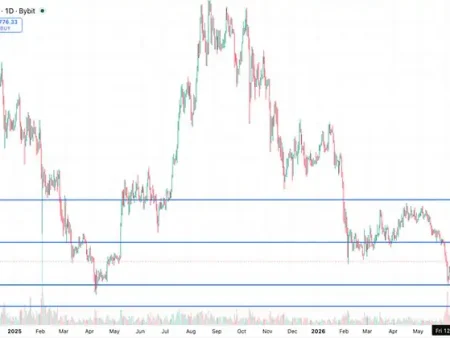
Description: Near remains one of the most discussed crypto ecosystems for AI, chain abstraction and cross-chain transactions. Read our NEAR coin guide here.
Risk warning: Trading, buying or selling crypto currencies is extremely risky and not for everyone. Do not risk money that you could not afford to loose.
Any deposit methods that you are keen to implement on NearPay?
At the time, Ivan said NearPay supported deposits with popular cryptocurrencies and was planning to add more NEAR-native assets. Fiat deposits mentioned in the interview included Visa, Mastercard, SEPA transfers and GBP Faster Payments.
He also said NearPay was negotiating with other payment service providers to expand geographic coverage and reduce fees.
Crypto Lists says: Deposit fees matter more than many crypto companies admit. A product can look smooth, but if the spread, card fee or withdrawal fee is too high, users quickly go back to exchanges or bank apps.
Do you think UnionPay or Maestro will be accepted with NearPay soon?
Ivan said both UnionPay and Maestro could be integrated if NearPay reached agreements with payment service providers.
Crypto Lists update: This was a forward-looking answer from 2022, not a confirmed 2026 feature list. Anyone checking NearPay today should confirm current payment networks directly on NearPay.io or through its official sales or support channels.
How does NearPay differentiate from Sender Wallet?
Ivan described NearPay as a custodial wallet, unlike Sender Wallet. He said NearPay could attach a card to the wallet, allow deposits and withdrawals through bank cards and wire transfers, and support more assets than only NEAR-based tokens.
He also argued that custodial wallets can be easier for users who lose passwords, while non-custodial wallets can lead to permanent loss if seed phrases are lost.
Crypto Lists view: This is a fair point, but it cuts both ways. Custodial wallets can be easier for beginners, but they introduce platform risk. Non-custodial wallets give users more control, but they punish mistakes. There is no perfect wallet model for everyone.
Which are the 3 most bought cryptocurrencies with NearPay?
Ivan said users mostly used NEAR, while BTC, Ether and stablecoins such as USDT and USDC were also popular choices.
Crypto Lists update: This answer should be read as a 2022 snapshot. In 2026, NEAR’s market story is broader than payments alone. The project is often discussed in relation to AI, account abstraction, chain abstraction and cross-chain transaction execution.
Why should I get a NearPay Visa card?
Ivan said NearPay Cards could help bring NEAR ecosystem capabilities into everyday use cases, such as paying for coffee, dinner, groceries or utility bills.
Crypto Lists view: The dream of paying directly with crypto has been around for years. The challenge is that most users still think in fiat when buying daily goods. Cards and on-ramps can hide the blockchain complexity, but they also depend on banks, networks, compliance partners and fees.
Are there different reward levels? Lounge access or anything like that?
Ivan said NearPay did not offer an incentive program at the time, but was considering one that could include staking.
Crypto Lists update: Rewards should always be checked carefully. Crypto card rewards can change quickly, and users should not choose a card only because of promised cashback, staking returns or temporary incentives.
How fast can I buy or sell the NEAR coin with NearPay?
Ivan answered: in a matter of seconds. He pointed to NEAR Protocol’s sharding mechanism and the network’s ability to scale.
Crypto Lists update: NEAR is still known for low fees and a user-friendly account model, but speed in a real payment product also depends on the fiat partner, KYC status, risk checks, bank transfer rails and liquidity provider used at the time of the transaction.
How many users did NearPay have and what was the estimate for 2024?
Ivan said NearPay had grown to approximately 20,000 users in the two months before the interview and expected to reach 1 million users in 2024.
Crypto Lists update: This is the clearest example of why the article needed a 2026 refresh. We do not treat that 1 million user target as verified. It was a forward-looking estimate from the original interview, not a current confirmed user number.
From the merchant’s point of view, why should they consider NearPay?
Ivan said NearPay provided merchants with an embedded on-ramp widget and a dashboard to track payments and invoices. The idea was to give businesses access to a fiat-to-crypto payment gateway while making the interface simple enough for normal commercial use.
Crypto Lists update: This part is still conceptually relevant. The current NearPay.io site also speaks more directly to merchants and platforms, with emphasis on payment infrastructure, SDKs, APIs and Tap to Pay rather than consumer crypto cards.
Do you accept all industries as a NearPay merchant?
Ivan said NearPay accepted many merchants, but not gambling, betting or cannabis businesses.
Crypto Lists asks: How come you don’t accept crypto casinos? That is a huge market and there is regulation in place for many jurisdictions. But perhaps it is too much compliance and risk involved?
Ivan replies: High-risk projects like casinos are not in line with our risk management policy, and may also conflict with our agreements with external contractors who provide us with business services like bank accounts.
He added that NearPay wanted to connect crypto and fiat worlds without going too far in one direction or the other. In his view, accepting risky or shady projects would make that mission harder.
Crypto Lists view: This answer still feels realistic. It is frustrating from an iGaming perspective because crypto casinos are a large market, but it is also understandable. Many payment companies avoid gambling because banking relationships, licensing, AML controls and chargeback risk can become complicated quickly.
Are there any well-known NearPay white-label brands yet?
At the time of the interview, Ivan said there were not yet any well-known white-label brands, although interest in NearPay was rising.
Crypto Lists would like to thank Ivan Ilin for answering our questions. We have preserved the interview because it shows how crypto payment infrastructure was being built during an important period for the NEAR ecosystem.
How NEAR Changed Since This Interview
The biggest reason to update this article is not only NearPay. It is NEAR itself.
In 2022, the NEAR story was often about a fast blockchain, an active conference ecosystem, new tokens and consumer-friendly wallets. In 2026, NEAR is more often discussed around AI-native infrastructure, chain abstraction and cross-chain execution.
NEAR’s current positioning is strongly connected to user-owned AI and agent-based activity. That does not automatically mean NEAR will win the AI-crypto race, but it does make the project more relevant than many older layer-1 chains that never found a second narrative after the 2021 bull market.
Another important development is chain abstraction. In plain English, the goal is to make blockchain use less dependent on switching wallets, bridges and networks. If NEAR accounts can help users or applications interact across multiple chains, the project becomes less about one isolated blockchain and more about simplifying crypto activity across many networks.
Should This Article Stay on Crypto Lists?
Yes, but only in this updated form.
The old version had too many links near the top and too much outdated optimism. However, deleting the interview completely would also remove a useful original piece of Crypto Lists content. The better approach is to preserve the interview, reduce unnecessary links, add a 2026 update and clearly explain what may have changed.
This is the type of older article that can still help a site if it is honest about its age. It should not pretend to be a current NearPay review. It should be an archived interview with practical commentary about wallets, scams, fiat bridges, merchant risk and NEAR’s evolution.
FAQ About NearPay, NEAR and This Interview
Is NearPay still connected to NEAR Protocol?
The original interview described NearPay as part of the NEAR ecosystem and focused on NEAR wallet, card and on-ramp use cases. In 2026, the current NearPay.io site presents NearPay mainly as payment infrastructure and Tap to Pay technology, so readers should verify the current relationship and product details before assuming it is the same consumer crypto product described in 2022.
Is NearPay.co still the right website?
No. The current URL we are using is NearPay.io. Older references to NearPay.co may appear in archived material, but readers should be careful with old crypto links and always verify the current official domain.
Was NearPay a non-custodial wallet?
No. In the original interview, NearPay was described as custodial. That means the service handled wallet creation and account access for users, which can be easier for beginners but also introduces platform and counterparty risk.
Why did NearPay avoid crypto casinos?
Ivan said gambling and betting were not in line with NearPay’s risk management policy and could conflict with external banking or business-service relationships. From a payment-company perspective, this is not unusual because gambling is often treated as a higher-risk sector.
Why is NEAR talked about in AI now?
NEAR has increasingly positioned itself around user-owned AI, private AI infrastructure and chain abstraction. The idea is that AI agents may need blockchain accounts, payments and cross-chain execution. This is a newer part of the NEAR story and was not the main focus of the original NearPay interview.