
·📅 23 Oct 2025·🔄 Updated: 20 Aug 2026
Sweden is preparing one of the most significant shifts in its online casino payment environment. From April 2026, the use of credit and debit cards for deposits at non Swedish licensed online casinos will be banned.
As a partner of the Scandinavian & Nordic Gaming Show, Crypto Lists had front-row visibility on the discussions shaping this move — making this development especially relevant to us and our readers. Both debit and credit cards been key for Scandinavian players and it’s estimated by Crypto Lists that over 90% of all players in Sweden use either VISA, Mastercard, American Express when making deposits into online casinos. But in 2026, the rules will now change and regardless if you have a gold, platinum or normal bank card, you’ll most likely not be able to use it. Let’s go into why this is happening, what it will mean, how it affect players and casinos along with the main alternatives going forward.
Why the change is happening?
The driving force behind this reform is the ambition of the Swedish Gambling Authority (Spelinspektionen) and the Swedish government to curb the flow of players away from licensed domestic casinos and towards unlicensed offshore sites. Under the current Swedish Gambling Act (Spellag 2018:1138), companies directing gambling services at Swedish players must hold a licence.
By cutting off one of the most common payment methods — cards — authorities aim to tighten control over the funding of unlicensed operators and reduce player exposure to high-risk services.
What it means for online casinos
Major licensed Swedish operators such as Betsson, LeoVegas and Unibet will need to overhaul how they accept payments. Card deposits have been a staple; without them, the transition will be substantial.
For offshore or anonymous casinos still accepting Swedish players, the risk profile increases dramatically. Accepting card payments from Swedish residents may become a direct criminal liability. Some operators may withdraw from the Swedish market; others may pivot entirely to alternative payment methods – most likely crypto or e-wallets. There will also most likely be an increase for localized payment methods, such as Interac in Canada, Pix for real time transfers in Brazil, Sofort will likely gain market share in parts of the German speaking market, Swish might become even bigger in Sweden and crypto payment processors will likely be an increasingly important gateway into crypto casino sites the coming year. Mifinity seems to be the biggest one right now (based on 700+ reviews on our site), but Coins Paid, BTC Direct, Banxa and eZeeWallet might gain market shares in 2026.
What this means for players
For the player, deposit options via cards will vanish — but that doesn’t equate to a ban on playing altogether. Players won’t personally face criminal charges, but they will have fewer traditional funding routes. Many are likely to turn to cryptocurrencies to continue playing seamlessly. However, if the cryptocurrencies goes up a lot they are likely to be used even more, but if they continue to go down from current levels, maybe more will use e-wallets instead. More players might turn to crypto only casinos such as LTC Casino, that accept more than just Litecoin. But I wonder what will happen to hybrid casinos that have both crypto and fiat options, such as Cryptorino. Perhaps they will simply remove the card and e-wallet options for Swedes in 2026? In either case, there is one clear winner..
Crypto alternatives rising for online casinos
With cards going out, crypto is set to become the gateway for casino deposits. Here are the top options likely to dominate:
• Bitcoin (BTC): Ubiquitous in the crypto-casino world; accepted by most sites that allow crypto. The question for players might be if the casino in question allow transfers on the Lightning network or not? That can speed up the transfers a lot. Discover all Bitcoin accepting casinos here.
• Tether (USDT) & USD Coin (USDC): Stablecoins reduce volatility and are already popular in European markets. See where you can use Tether for deposits here and ask yourself which network to use (eg. Solana, Ethereum, Tron, BSC, Polygon or any other one so your transfer doesn’t end up on the wrong place).
• Ethereum (ETH): Widely supported, and often used for more than just deposits — e.g., tokenised casino ecosystems. A majority of all the crypto casinos reviewed on our site support Buterin’s cryptocurrency.
• Solana (SOL): Low fees and high speed make it an emerging favourite, especially as U.S. SEC approval of a Solana ETF becomes more likely. See a list of all the best crypto casinos that accept Solana here.
• Litecoin (LTC): A legacy altcoin with faster transactions and cheaper fees — still one of the most accepted cryptos in casinos. Find the best Litecoin accepting casinos here.
• Meme coins (DOGE, SHIB): While not the strongest foundation for value, they continue to be offered by some crypto-friendly casinos thanks to community demand. Following the support from Elon Musk, it’s most likely that Dogecoin is the most popular for deposits among meme coins.
In Scandinavia, exchanges such as Binance, KuCoin, and local Nordic platforms (Trijo or the bigger and more reputable Safello) already allow Swedish users to convert fiat into crypto — making the transition to crypto deposits increasingly accessible.
As always, CryptoLists.com tracks a wide range of deposit methods and do real money tests, mainly with crypto, but occasionally we are using e-wallets and cards.
What happens next? Key dates to consider
Preparations are already underway. 2026 will be a new start, and some businesses might want to start the new year with new strategies for payments, at least for the Scandinavian market where debit and credit cards are about to be blocked (at least in the biggest market: Sweden).
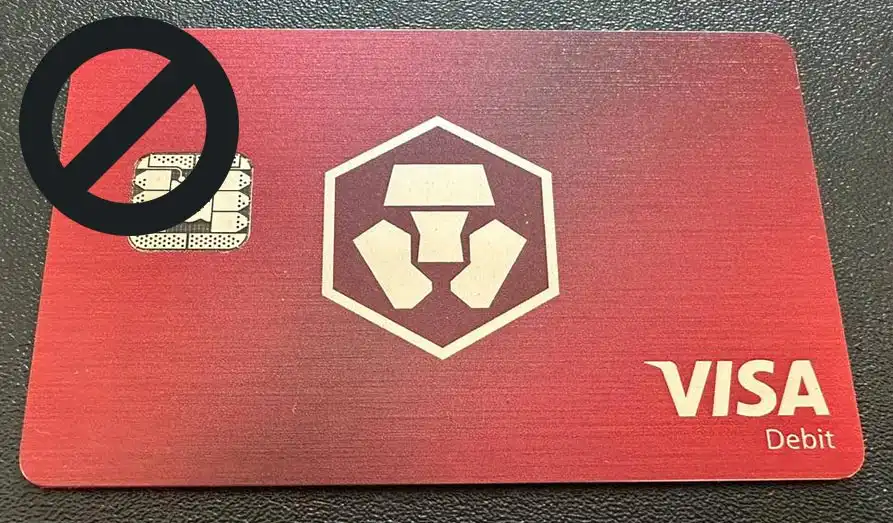
As early as February-March 2026, banks and card networks in Sweden are expected to begin enforcement ahead of the April deadline. Payment services such as Visa, Mastercard, Maestro, American Express and even fintech brands like Revolut will face restrictions.
For casinos, the pressure will mount. They will need to shift to bank transfers, e-wallets or crypto deposits. Some may withdraw from Sweden entirely. Others will lean heavily into crypto, which is unlikely to be targeted in the same way. Starting from the 1st of January 2027, casinos without a local Swedish license have to geo-block the country but until then, sites are allowed to accept players from Sweden as long as they don’t “target” the market (with local language in my book).
From a macro perspective, this push in Sweden mirrors trends in other regulated markets where payment control is driving growth in crypto gambling deposit volumes. Sweden is a bit behind in crypto-adoption compared to parts of Asia or Eastern Europe — but thanks to this regulatory shift, we at CryptoLists expect crypto use in Swedish casinos to accelerate and become more mainstream and transparent in the coming years.
Final thoughts
The April 2026 ban on card deposits at casinos won’t end online gambling in Sweden — it will change how players transact. For operators, the cost of compliance and risk of enforcement are rising. For players, it means navigating a new payout environment where crypto plays a central role.
As we witnessed during our time at the Scandinavian & Nordic Gaming Show, regulation and innovation are converging fast in the Nordics. CryptoLists will continue tracking how this transformation unfolds.